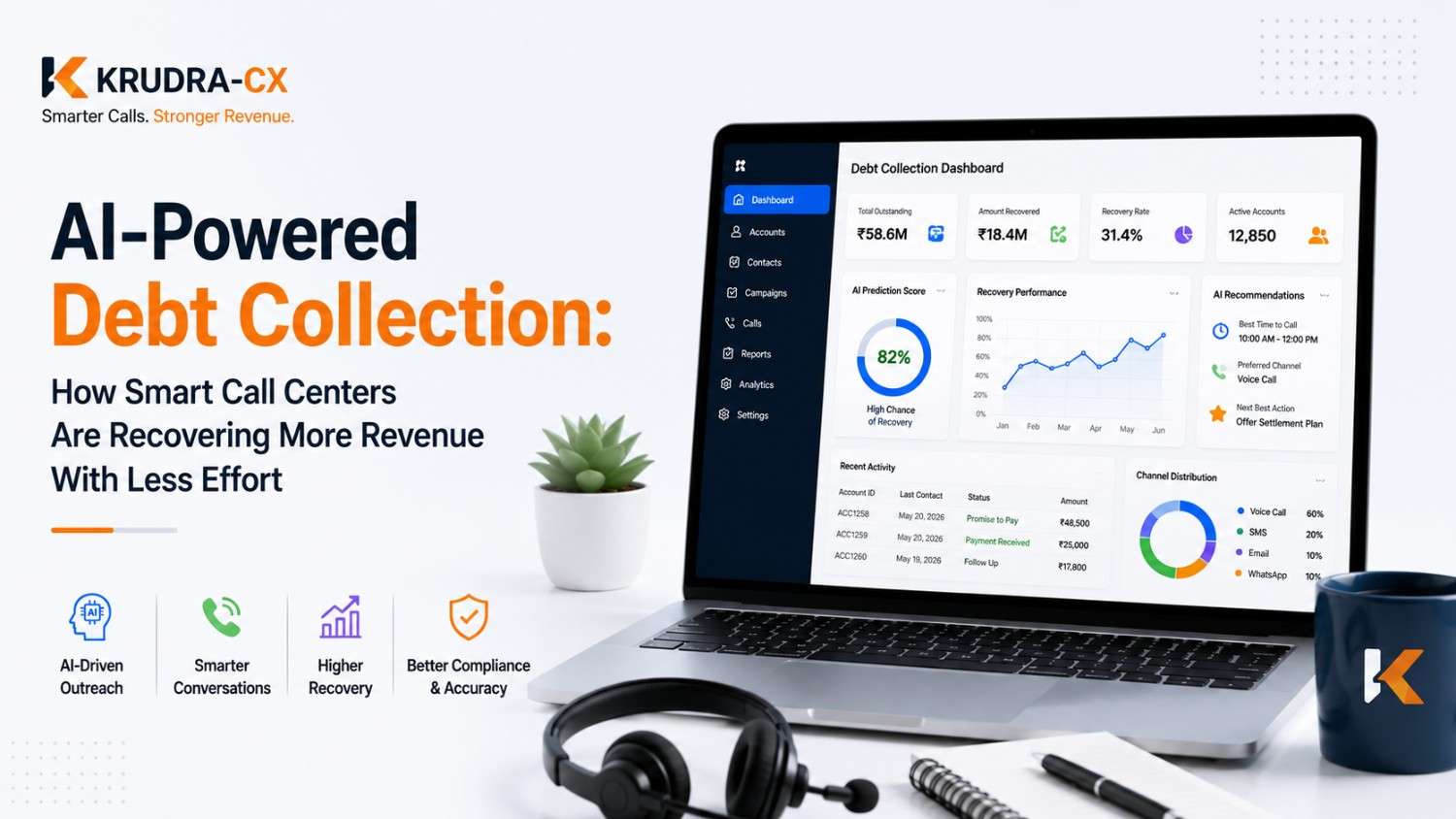
AI-Powered Debt Collection: How Smart Call Centers Are Recovering More Revenue With Less Effort
Every collection team knows the feeling. A list of a few hundred overdue accounts, a handful of agents, and a workday that never seems long enough. Agents dial number after number, hoping to reach someone who will actually answer, actually listen, and actually pay. More often than not, they get voicemail, a wrong number, or silence. By the time they reach the right person, the best moment to have that conversation has already passed.
This is the reality of manual collections — a process built on guesswork rather than data. And in an industry where every day an account stays overdue reduces the odds of ever recovering it, guesswork is expensive. This is exactly the gap that artificial intelligence is closing. AI doesn't replace collection agents; it tells them who to call, when to call, and how to approach the conversation, so that every call has a far higher chance of turning into a payment.
In this blog, we'll break down exactly how AI is transforming collection calling, what tools are driving that change, and why call centers that adopt these tools are seeing measurably better recovery rates — without adding headcount or extending working hours.
The Problem With Traditional Collection Calling
Before understanding how AI helps, it's worth understanding what's actually broken in manual collections.
1. Random or static dial lists. Most collection teams work through accounts in a fixed order — oldest first, largest balance first, or simply top to bottom on a spreadsheet. There's no consideration of when that specific person is most likely to answer or what channel they respond to best.
2. No visibility into best-time-to-call data. A borrower who never picks up at 11 AM might answer immediately at 7 PM. Without behavioral data, agents have no way of knowing this, so they keep calling into a wall of missed connections.
3. Missed follow-ups. When agents are managing hundreds of accounts manually, promises-to-pay (PTPs) get forgotten, callbacks slip through the cracks, and accounts that were nearly recovered go cold again.
4. Compliance risk. Regulations around permissible calling hours, frequency of contact, and consent are strict and vary by region. Manual processes make it easy to accidentally violate these rules — leading to complaints, penalties, or reputational damage.
5. Agent burnout. Dialing dead numbers all day is demoralizing. Agents spend more time waiting and re-dialing than actually having productive conversations, which increases attrition in an already high-turnover industry.
The result is a system where a lot of effort goes in, but recovery rates stay flat — or decline — as overdue accounts age.
How AI Actually Improves Collection Calls
AI doesn't magically make a debtor want to pay. What it does is remove the inefficiency between "an account is overdue" and "the right conversation happens with the right person at the right time." Here's how, in practical terms.
1. Predictive and Smart Dialing
Instead of dialing a static list top to bottom, an AI-powered auto dialer analyzes historical call data — time of day, day of week, past pickup patterns, and even regional trends — to decide which numbers to dial and in what order. It automatically skips numbers that are known to be disconnected, on do-not-call lists, or repeatedly unresponsive, so agents spend their time on live, promising conversations instead of dead ends.
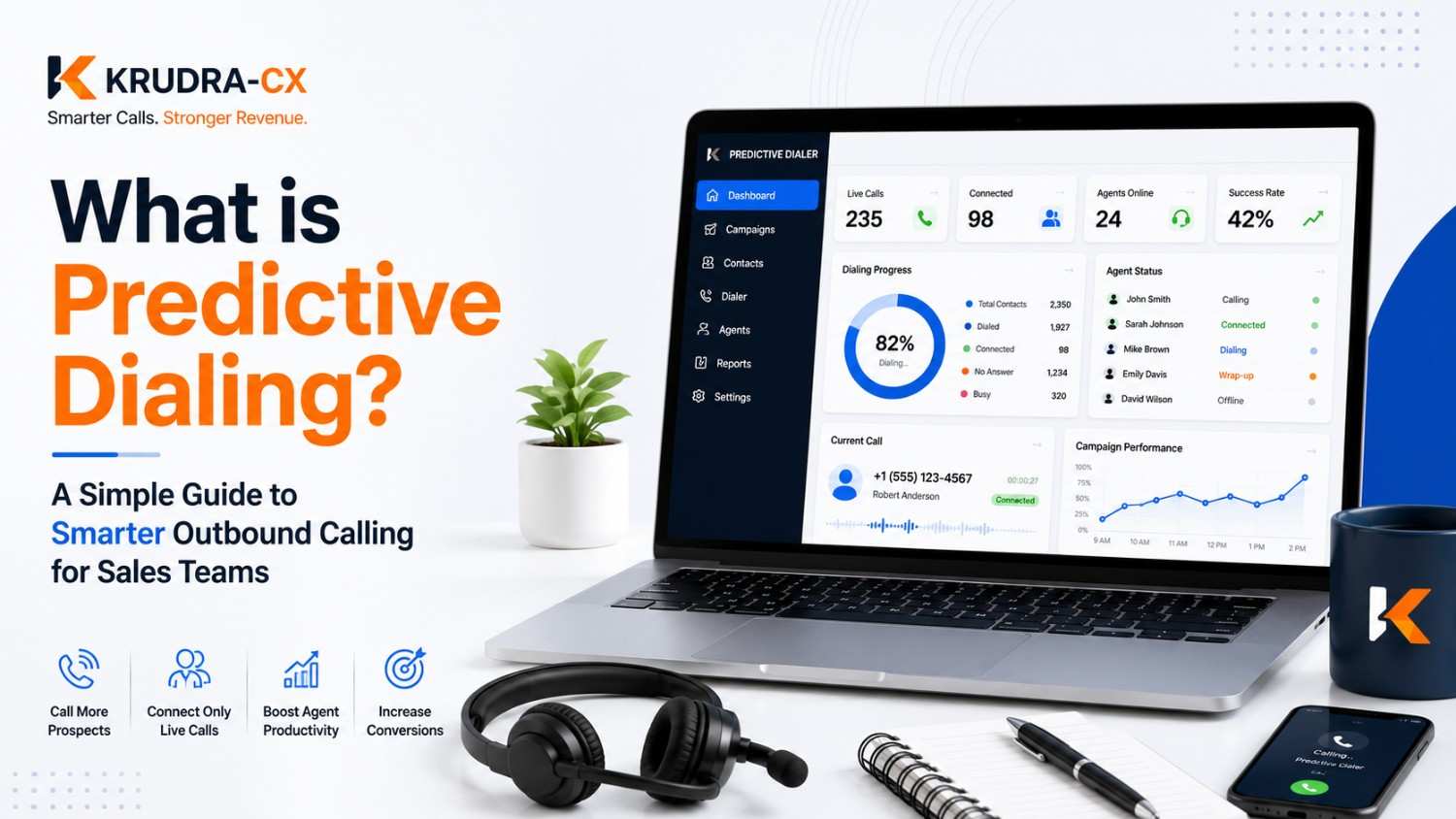
Some systems go further, using predictive dialing that adjusts the pace of outbound calls in real time based on agent availability and expected answer rates — meaning agents are almost never sitting idle, and almost never overwhelmed with simultaneous connects either.
2. AI-Prioritized Call Queues
Not every overdue account carries equal urgency or equal recovery potential. AI models can score accounts based on factors like balance size, days overdue, repayment history, and likelihood of contact success, then rank them into a prioritized queue. Agents open their dashboard and see, essentially, "call this account now — the model estimates an 80%+ chance of reaching the right person in the next 20 minutes." This turns a scattershot approach into a focused, high-yield workflow.
3. Smart IVR for Self-Service Repayment
Not every collection conversation needs a live agent. Automated IVR (Interactive Voice Response) systems can call or be called by customers to deliver payment reminders, confirm outstanding balances, and even let the customer make a payment or set up a repayment plan — entirely without human intervention. This is particularly effective for straightforward, low-friction cases, freeing agents to focus on more complex or sensitive accounts that genuinely need a human touch.
4. Voice Broadcasting for Proactive Reminders
One of the most underused strategies in collections is reaching out before an account becomes seriously overdue. Voice blaster tools allow companies to send bulk, pre-due reminder calls to hundreds or thousands of customers simultaneously — a simple nudge that can prevent an account from slipping into collections in the first place. Prevention is almost always cheaper and faster than recovery.
5. Real-Time Analytics and Performance Dashboards
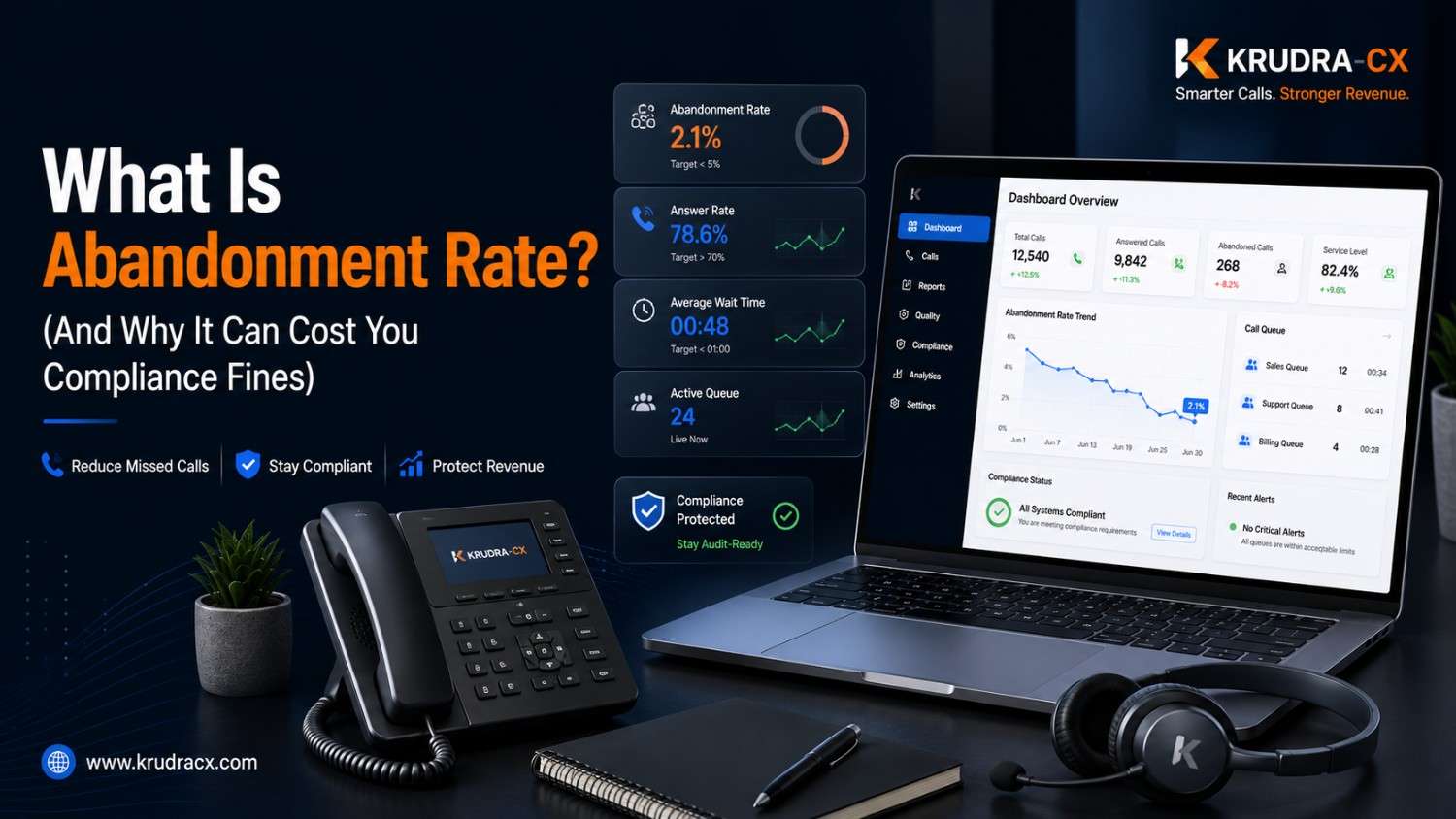
AI-powered call center platforms don't just make the calling process smarter — they make the entire operation measurable. Managers get live visibility into recovery rate by agent, by campaign, by time of day; promise-to-pay tracking; call outcome trends; and compliance flags. This means decisions about where to focus effort aren't based on monthly reports anymore — they're based on what's happening right now.
6. Sentiment Analysis and Escalation
More advanced systems can analyze tone and sentiment during a call in real time, flagging conversations that are becoming tense or unproductive so a supervisor can step in, or routing emotionally difficult cases to agents specifically trained for de-escalation. This protects both the customer experience and the company's compliance standing.
Why This Matters for Recovery Rates
The compounding effect of these tools is significant. When agents are only dialing numbers with a high probability of connecting, at times when the customer is most likely to answer, right-party contact rates go up substantially. When accounts are automatically prioritized by urgency and recovery potential, agents spend their limited time where it counts most. When routine reminders and simple repayments are automated, human agents are freed to focus entirely on the accounts that need real negotiation and empathy.
The net effect isn't just "more calls made" — it's more of the right calls made, at the right time, to the right person, followed up consistently. That's the difference between a collection process that plateaus and one that keeps improving month over month.
Compliance: A Critical Side Benefit
Beyond efficiency, AI-driven systems also make compliance dramatically easier to manage. Automated call windows ensure customers are only contacted during legally permissible hours. Call frequency caps prevent over-contacting the same customer. Every call is automatically logged and recorded, creating a clear audit trail if a dispute or regulatory inquiry ever arises. For collection teams operating under strict regulatory frameworks, this reduces risk substantially — turning compliance from a manual checklist into a built-in feature of the system itself.
What This Looks Like in Practice
Consider a mid-sized lending company managing a portfolio of a few thousand overdue accounts. Under a manual process, agents might work through the list linearly, achieving a right-party contact rate of perhaps 15–20%, with a large share of agent time spent re-dialing numbers that never connect.
After introducing an AI-powered collection workflow — predictive dialing, prioritized queues, automated pre-due reminders, and real-time dashboards — that same team typically sees right-party contact rates climb significantly, promise-to-pay conversion improve, and average time-to-recovery shorten. Agents report calls feeling more productive because they're consistently reaching people who are actually reachable and relevant, rather than working through dead weight.
This isn't about replacing the human element of collections — negotiation, empathy, and judgment still matter enormously. It's about removing the friction and waste that surrounds those human conversations, so more of an agent's day is spent doing the part of the job that actually moves accounts toward resolution.
Getting Started With AI-Powered Collections
For teams considering this shift, the path doesn't need to be complicated. It typically comes down to three steps:
- Connect your data. Sync overdue account information, contact history, and payment records into the platform.
- Let AI build the calling strategy. The system generates prioritized dial lists and optimal call timing automatically, updating daily as new data comes in.
- Monitor and refine. Use the analytics dashboard to track recovery rate, agent performance, and compliance in real time, adjusting strategy as patterns emerge.
Most teams see measurable improvement within the first few weeks, simply because the system eliminates so much of the wasted effort baked into manual dialing.
Final Thoughts
Debt collection has always been a numbers game, but for too long, it's been played with incomplete information — agents guessing at who to call and when, hoping today's list produces better results than yesterday's. AI changes that equation by turning historical data into a forward-looking strategy: the right account, the right time, the right channel.
For collection teams under pressure to recover more with the same headcount, the choice isn't really between "AI or agents." It's about giving agents the intelligence they need to make every call count — and letting automation handle the reminders and routine cases that don't need a human at all.
Platforms like KrudraCX bring these capabilities together — Auto Dialer, Smart IVR, Voice Blaster, and Call Center Suite analytics — into a single system built specifically for teams that need to recover revenue faster, stay compliant, and stop wasting agent hours on dead-end calls.
Ready to see it in action? Book a free demo at www.krudracx.com and find out how AI can transform your collection process.