How Great Support Drives Business Growth
Introduction: The Support Paradox
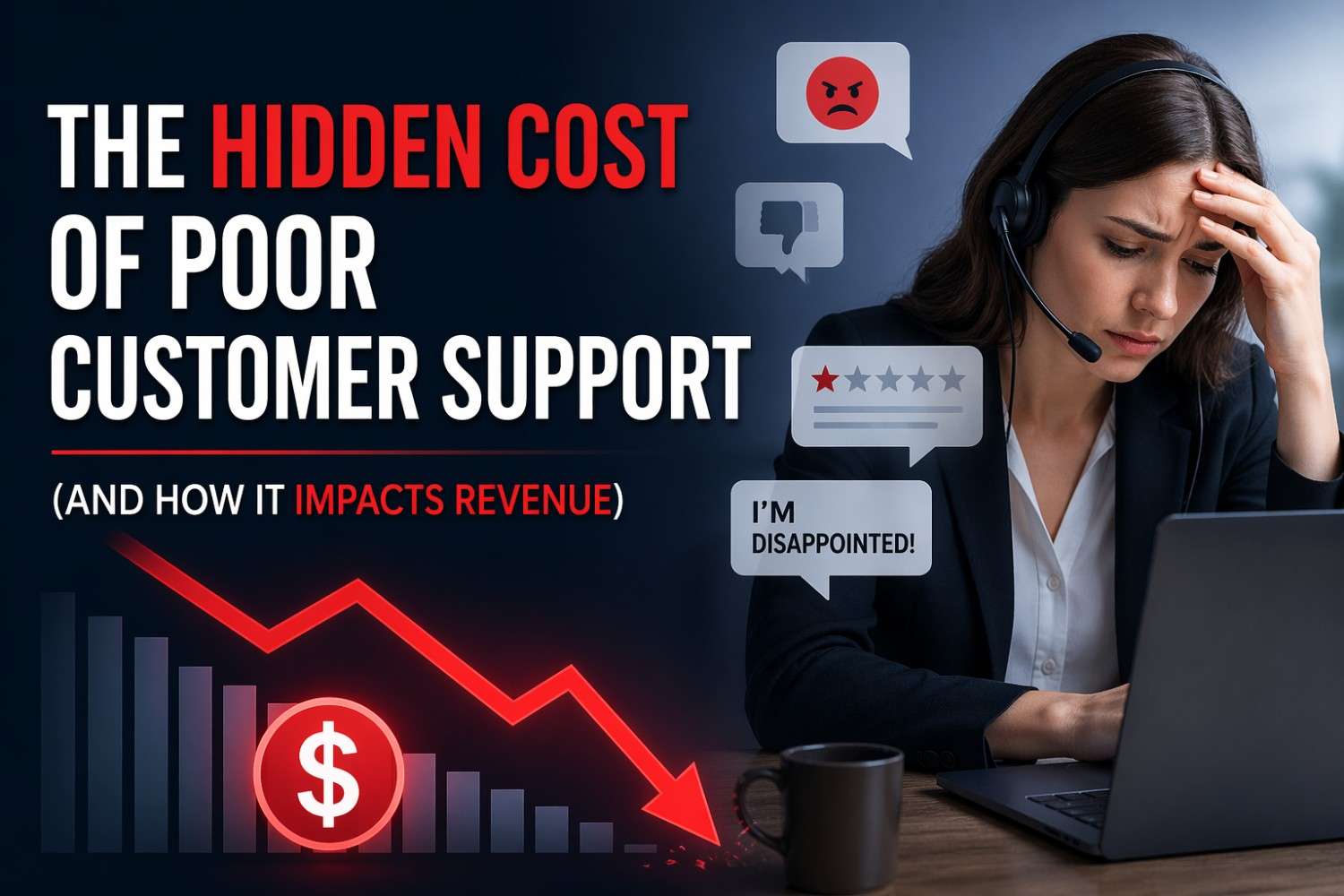
There's a dangerous belief running through most businesses — that customer support is a necessary expense, something to be managed and minimized, not invested in and scaled.
So companies hire the cheapest agents, use the most basic tools, keep support teams understaffed, and measure success only by how quickly tickets get closed.
And then they wonder why customers keep leaving.
Here's the truth that the fastest-growing businesses already know: support is not a cost center. It's a growth engine.
Every interaction your support team has is either building trust or destroying it. It's either turning a frustrated customer into a loyal advocate or handing them directly to your competitor. There is no neutral outcome.
This blog breaks down the full picture — why great support drives growth, what the data says, and exactly how to build a support system that doesn't just retain customers but actively grows your business.
Part 1: The Business Case for Great Support
1.1 Retention Is the New Acquisition
The business world is obsessed with acquisition — ads, funnels, cold outreach, growth hacks. But the math of retention is far more powerful than most founders realize.
According to research by Bain & Company, increasing customer retention by just 5% can increase profits anywhere between 25% and 95%. That's not a typo. A 5% improvement in how well you hold onto existing customers can nearly double your profits.
Why? Because retained customers:
- Spend more over time (higher lifetime value)
- Require less marketing spend to maintain
- Are far more likely to buy additional products or services
- Refer other customers to you — at zero acquisition cost
Contrast that with the cost of acquisition. Studies consistently show that acquiring a new customer costs 5 to 7 times more than retaining an existing one. Every customer you lose to poor support isn't just a lost sale — it's a forced acquisition you now have to pay for just to stay at the same revenue level.
Great support is what makes retention possible. It is, functionally, your most cost-effective growth strategy.
1.2 The Hidden Revenue in Every Support Ticket
Most businesses look at a support ticket and see a problem to solve. High-performing businesses look at a support ticket and see an opportunity.
When a customer reaches out — especially with a complaint — they are doing something statistically rare. Research shows that for every customer who complains, approximately 26 others with the same problem simply leave without saying a word. That means the person filing a ticket is actually giving you a gift: a chance to fix something that is silently costing you dozens of other customers.
A support interaction handled well doesn't just resolve the issue — it creates what psychologists call the "service recovery paradox." Studies show that a customer whose problem was resolved excellently often ends up more loyal than a customer who never had a problem at all.
That one great support interaction can turn a frustrated customer into your loudest advocate.
1.3 Word of Mouth Is Still the Most Powerful Growth Channel
Nielsen research consistently finds that 92% of consumers trust recommendations from friends and family above all other forms of advertising. Referrals convert at higher rates, close faster, and retain longer.
What drives referrals? Extraordinary experience — and in today's world, where products and prices are increasingly commoditized, the experience is almost entirely determined by the quality of your support.
Nobody brags about a product that "works as advertised." They brag about the time a support agent went out of their way to solve their problem at 11pm, or the time a company proactively reached out before they even noticed an issue. Those are the stories that spread.
Great support creates stories worth telling. And those stories drive growth that no ad budget can replicate.
Part 2: How Support Directly Impacts Revenue
2.1 Churn Is Eating Your Revenue Silently
Churn is the single most underestimated threat to business growth. It's slow, quiet, and cumulative — which is exactly what makes it dangerous.
Consider this: if your monthly churn rate is 5%, you are losing 46% of your customers every year. To stay flat, you need to replace nearly half your customer base annually. To grow, you need to replace that half and then add more on top of it.
The leading cause of churn is not price. It's not competition. According to a study by Accenture, 61% of customers who switched companies did so because of poor customer service — and most of them didn't complain first. They just left.
Fixing your support quality is not a "nice to have" upgrade. It is plugging a hole in the bottom of your revenue bucket.
2.2 Support Drives Upsells and Expansion Revenue
In SaaS and subscription businesses especially, the support team is often the first to know when a customer is struggling — or when they are thriving and ready for more.
A well-trained support team doesn't just close tickets. They notice patterns. They identify when a customer is repeatedly hitting the limits of their current plan. They spot when a customer is using a workaround that a premium feature would solve elegantly. They pick up on signals of satisfaction that make the right moment to introduce an upsell.
This is why the best companies in the world — from Salesforce to Zoho — have deeply integrated their support and sales functions. The support conversation is often the warmest, most trust-filled sales conversation you will ever have.
2.3 The NPS and Revenue Connection
Net Promoter Score (NPS) — the metric that measures how likely customers are to recommend you — is directly correlated with revenue growth. Companies with high NPS grow at more than twice the rate of their competitors.
And the single biggest driver of NPS? The quality of support interactions.
A Temkin Group study found that companies that earn $1 billion annually can expect to earn, on average, an additional $700 million within 3 years of investing in customer experience. For SaaS businesses specifically, this number jumped to $1 billion in additional revenue.
The math is not subtle. Great support builds NPS. High NPS drives growth.
Part 3: The Pillars of Support That Actually Drives Growth
So what does "great support" actually look like in practice? It's not just being friendly. It's a system built on five core pillars.
3.1 Speed: The Non-Negotiable Foundation
Speed is the first filter every customer applies when evaluating their support experience. Before they care about how knowledgeable your agent is or how friendly they are, they care about how fast you respond.
HubSpot research found that 90% of customers rate an "immediate" response as important or very important when they have a customer service question. For most customers, "immediate" means 10 minutes or less.
This is where most businesses fail. They have agents manually triaging emails, calls going to voicemail during peak hours, and no system for prioritizing urgent issues over routine ones.
Speed improvements come from:
- Intelligent call routing that connects customers to the right agent the first time
- Automated acknowledgment so customers know they've been heard even before a human picks up
- Omnichannel presence so customers can reach you on WhatsApp, email, phone, or chat — and get equally fast responses on all channels
- Self-service options for common queries so your agents can focus on complex issues
You don't need to be perfect. You need to be fast. Speed communicates respect for the customer's time, and respect is the foundation of loyalty.
3.2 Personalization: Making Customers Feel Known
The moment a customer has to repeat themselves — explain their issue again to a second agent, re-share their account details, re-describe the context they already gave — your relationship with them takes a measurable hit.
Personalization isn't about using someone's first name in an email subject line. It's about making every interaction feel like a continuation of a relationship rather than the start of a cold transaction.
This requires:
- CRM integration with your support platform so agents see the full customer history before they say hello
- Previous interaction logs accessible in real time so no context is ever lost
- Customer segmentation so high-value accounts automatically receive prioritized handling
- Proactive outreach when your systems detect a potential issue before the customer even notices
When a customer calls you and your agent already knows their name, their plan, the last issue they had, and the resolution that worked — the customer feels valued. That feeling is worth more than any discount you could offer.
3.3 Consistency: Building Trust Across Every Touchpoint
Great support delivered once is a pleasant surprise. Great support delivered consistently, across every channel, every agent, and every interaction, is what builds unshakeable loyalty.
Consistency requires investment in:
- Documented SOPs so every agent handles the same situation the same way
- Training programs that go beyond product knowledge into communication skills, empathy, and de-escalation
- Quality monitoring through call recording and review to catch inconsistencies early
- Channel parity so the quality of support on WhatsApp matches the quality on phone matches the quality on email
Many businesses accidentally create a two-tier support system — where customers who call get better service than customers who email, or where enterprise accounts get VIP treatment while small businesses get ignored. These inconsistencies create resentment and drive churn among exactly the customers you most need to retain.
3.4 Empathy: The Human Differentiator
As more support interactions get automated — chatbots, IVR menus, AI-generated responses — the businesses that win will be the ones that still make customers feel genuinely heard.
Empathy in support means:
- Acknowledging frustration before jumping to solutions
- Using language that validates the customer's experience ("I completely understand why that's frustrating")
- Giving agents the autonomy to make judgment calls that benefit the customer, not just the script
- Following up after resolution to confirm the fix actually worked
Empathy cannot be scripted, but it can be cultivated. It comes from hiring people who genuinely care, training them to listen actively, and creating a company culture where doing right by the customer is celebrated — not just closing the most tickets per hour.
3.5 Proactivity: Moving From Reactive to Predictive
The highest level of support is the kind the customer never has to ask for.
Proactive support means reaching out to customers before they know they have a problem. It means sending a heads-up when your system detects unusual usage patterns. It means calling a client when their renewal is approaching to review their satisfaction before they start looking at alternatives. It means following up after an onboarding to make sure they're actually getting value.
Proactive support does three things simultaneously: it prevents churn, it builds trust, and it creates natural upsell opportunities. All three directly drive revenue.
Part 4: Building a Support-First Culture
Great support doesn't come from tools alone. It comes from culture — a company-wide belief that every customer interaction matters.
4.1 Leadership Sets the Standard
Support culture starts at the top. When leadership teams treat support as a low-priority department — underfunding it, understaffing it, measuring it only by cost-per-ticket — that attitude percolates through the entire organization.
The companies with the best support cultures — Zappos, Ritz-Carlton, Apple, Zoho — are led by people who personally care about customer experience and make it a visible company priority.
As a business owner or founder, your job is to model the behavior you want your support team to exhibit: curiosity, patience, ownership, and genuine care.
4.2 Empower Your Agents
The worst support interactions happen when agents are constrained by rigid rules that prevent them from actually helping. Customers escalate, agents apologize helplessly, frustration compounds.
Empowered agents — ones who have the authority to offer refunds up to a certain threshold, to make exceptions for loyal customers, to go off-script when the situation calls for it — resolve issues faster, create more positive outcomes, and feel better about their work.
Agent satisfaction and customer satisfaction are directly correlated. Happy agents give better support. Better support retains more customers. More retained customers grow your revenue. This virtuous cycle starts with how you treat your team.
4.3 Use Data to Drive Decisions
You cannot improve what you do not measure. A data-driven support operation tracks:
- First Contact Resolution (FCR) — how often issues are solved in one interaction
- Average Handle Time (AHT) — how long each interaction takes
- Customer Satisfaction Score (CSAT) — immediate post-interaction feedback
- Net Promoter Score (NPS) — long-term loyalty indicator
- Churn Rate by Support Interaction Type — which issues are most strongly linked to customer departure
These metrics tell you exactly where your support system is breaking down and where to invest to fix it. Without them, you're improving by guesswork.
Part 5: The Technology Stack That Powers Great Support
You cannot scale great support without the right tools. Manual processes — spreadsheets, individual inboxes, disconnected phone systems — create the exact conditions that lead to slow responses, lost context, and frustrated customers.
The modern support stack for a growing business should include:
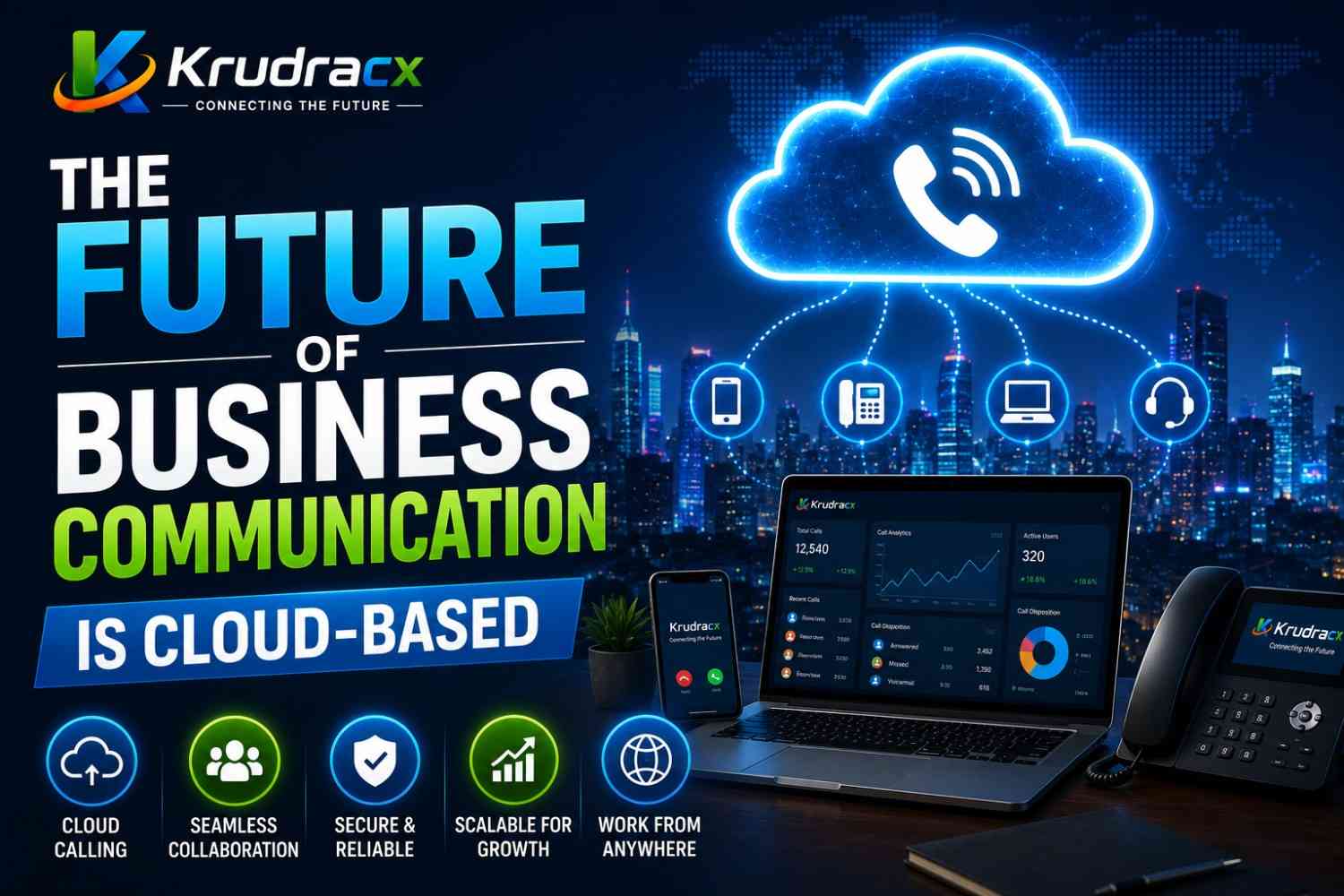
Cloud-Based Business Phone System — enables remote teams, intelligent call routing, call recording, and real-time monitoring without expensive hardware.
Omnichannel CRM — unifies customer conversations from phone, email, WhatsApp, and chat into a single timeline so no context is ever lost.
Help Desk Software — manages tickets, SLAs, escalation rules, and agent workload in one place.
Analytics Dashboard — gives leadership real-time visibility into support performance, queue sizes, and team efficiency.
AI-Powered Assistance — helps agents with suggested responses, sentiment detection, and automatic tagging — reducing handle time without reducing quality.
The goal is not to replace human support with technology. It is to remove the friction that prevents your human agents from doing their best work.
Conclusion: Support Is Your Competitive Moat
In a world where products can be copied, prices can be undercut, and ads can be replicated — your support experience is one of the few things that genuinely cannot be easily duplicated.
It is built from culture, from people, from systems, and from a long history of consistently choosing the customer even when it's inconvenient. That compound investment creates a competitive moat that protects your revenue, fuels your growth, and earns the kind of loyalty that no marketing campaign can buy.
The businesses that will win the next decade are not the ones with the biggest ad budgets. They are the ones that make every customer feel like the most important person in the room — every single time.
Start there. Grow from there.
About krudracx
krudracx helps businesses build smarter communication systems — from cloud calling to omnichannel support — so they can deliver the kind of service that turns customers into advocates. Follow us on Instagram @krudracx for daily insights on B2B growth, sales, and customer experience.