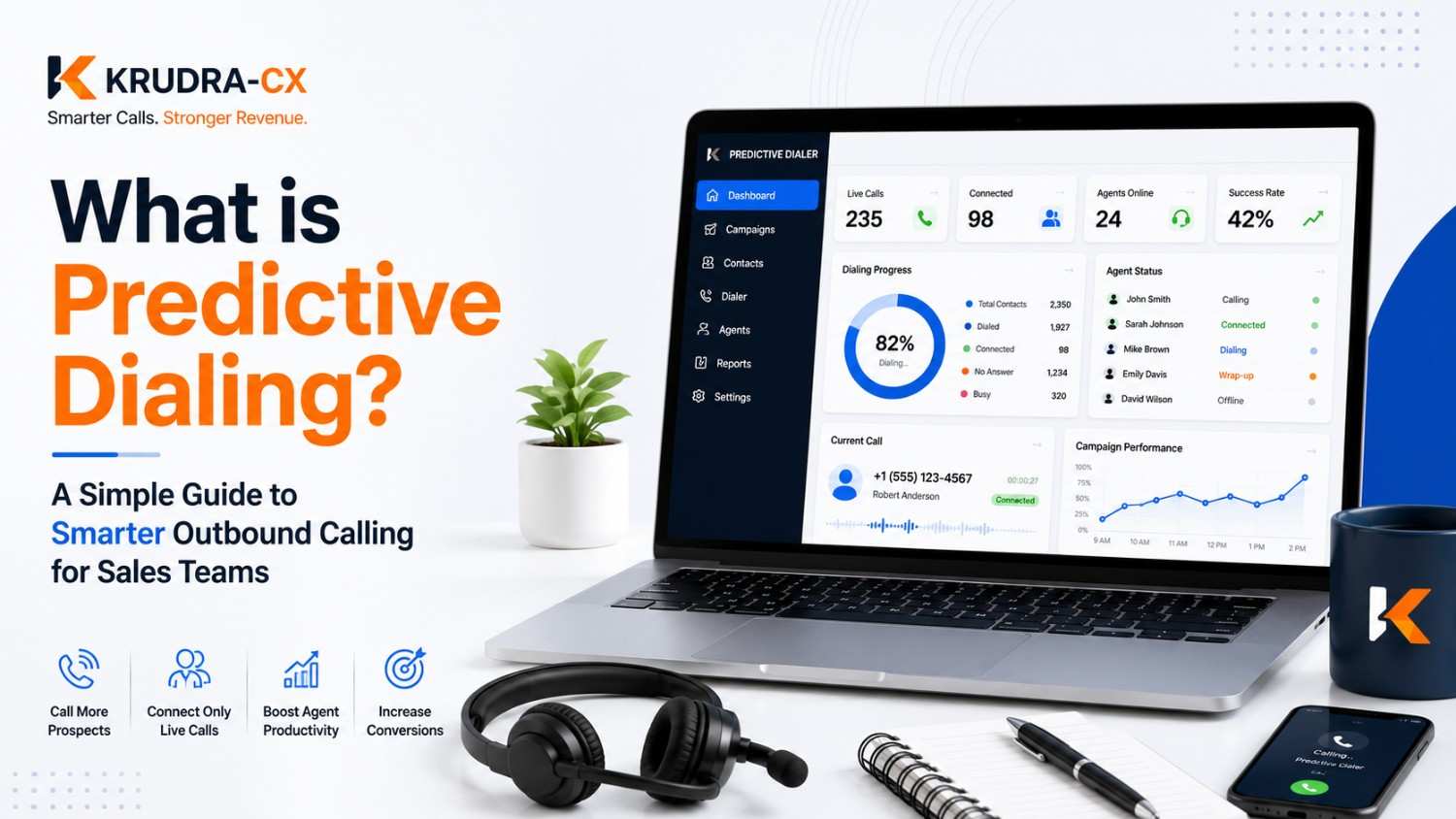
A Simple Guide to Smarter Outbound Calling for Sales Teams
If you run an outbound sales team or a call center, you already know the biggest problem: agents spend more time dialing than talking. They dial a number, it rings, nobody picks up. They dial again, it goes to voicemail. They dial again, the line is busy. This goes on for hours, and by the end of the day, an agent may have made 100 calls but only had 15 real conversations.
This is exactly the problem predictive dialing was built to solve.
In this blog, we will explain what predictive dialing is, how it actually works behind the scenes, why so many sales and support teams use it, and what you should keep in mind before using it. We will keep things simple, so even if you are new to call center technology, you will understand everything by the end.
What is Predictive Dialing?
Predictive dialing is a call center technology that automatically dials multiple phone numbers at the same time, using an algorithm to predict when an agent will be free to take the next call. Instead of an agent manually dialing one number, waiting for it to connect, and then moving to the next, the system does all of this on its own.
The dialer keeps calling numbers in the background. It filters out calls that are not answered, calls that go to voicemail, calls that get a busy tone, and calls that fail to connect. Only when a real person picks up the phone does the system pass that live call to an available agent.
So instead of agents waiting on the phone for someone to answer, agents only get connected once a human is already on the other end, ready to talk. This is the core idea behind predictive dialing: reduce the agent's idle time and increase actual talk time.
How Does Predictive Dialing Actually Work?
To understand predictive dialing properly, it helps to break down what happens step by step.
Step 1: The system pulls numbers from a calling list
Your sales team uploads a list of leads or customers into the calling software. This could be a fresh leads list, a follow-up list, or a customer service callback list.
Step 2: The dialer starts calling multiple numbers at once
Instead of dialing one number per agent, the predictive dialer calls several numbers simultaneously, even before an agent is free. It does this because it knows, statistically, that not every call will be answered.
Step 3: The algorithm predicts agent availability
This is the "predictive" part. The software looks at data like:
- How many agents are currently on a call
- The average length of past calls
- How many calls typically go unanswered
- How long it usually takes for someone to pick up
Based on this data, the system calculates how many numbers it should dial right now so that by the time someone answers, an agent will likely be free to take that call.
Step 4: Unanswered calls get filtered out automatically
If a call goes to voicemail, rings out, or gets a busy signal, the system disconnects it without ever involving an agent. Agents never see or hear these failed attempts.
Step 5: Live calls get routed to the next available agent
The moment a real person answers, the call is instantly transferred to an agent who is free. The agent typically hears a short beep and then sees the customer's details pop up on their screen before they start talking.
This entire process happens in the background, automatically, call after call, all day long.
Why Do Sales Teams Use Predictive Dialing?
Now that we know how it works, let's talk about why it matters. Here are the main reasons businesses use predictive dialing.
1. It saves a huge amount of time
Manual dialing wastes time. An agent might spend 60 to 70 percent of their shift just waiting for calls to connect or listening to ringtones. Predictive dialing removes this dead time almost completely, since agents only join a call once someone has already answered.
2. It increases the number of conversations per day
Because agents are not wasting time on failed calls, they end up having many more real conversations in the same shift. A team that used to complete 100 dials and get 15 live conversations might now get 40 or 50 live conversations in the same amount of time.
3. It boosts overall productivity
When agents spend more time actually talking instead of dialing, output naturally goes up. This means more leads contacted, more follow-ups completed, and more deals in the pipeline, without hiring more agents.
4. It works well for high-volume calling
If your team needs to call through hundreds or thousands of leads regularly, like in telesales, debt collection, market research, or political campaigns, predictive dialing becomes almost necessary. Doing this manually simply cannot scale.
5. It reduces agent burnout from repetitive dialing
Manually dialing the same numbers over and over, especially when most calls go unanswered, is mentally draining. Predictive dialing removes this repetitive task so agents can focus their energy on the conversation itself, not the process of getting there.
Predictive Dialing vs Other Types of Dialers
It's easy to confuse predictive dialing with other dialing methods, so let's quickly compare them.
Manual Dialing
The agent dials every number by hand. This gives full control but is very slow and inefficient for high call volumes.
Preview Dialing
The system shows the agent a lead's information first, and the agent chooses when to dial. This is useful when agents need context before calling, like in complex B2B sales, but it is slower than predictive dialing.
Progressive Dialing
The system dials one number automatically per available agent. It is faster than manual and preview dialing but slower than predictive dialing since it only dials one number at a time per agent.
Predictive Dialing
The system dials multiple numbers at once, using data to predict agent availability, and connects agents only to live answered calls. This is the fastest method for high-volume outbound calling.
Each method has its place. Predictive dialing is best when call volume is high and speed matters most, such as outbound sales campaigns, lead qualification, and appointment reminders.
Key Benefits of Predictive Dialing for Businesses
Let's go a little deeper into the real business impact of using predictive dialing.
Better use of agent time
Every minute an agent isn't on a live call is a minute of cost without return. Predictive dialing minimizes this wasted time, which directly improves the return on your team's salary and effort.
Higher contact rates
Since the system is constantly calling in the background, it naturally increases the number of people your team actually reaches, especially important when working through large lead databases where many numbers may be outdated or unreachable.
More consistent output
Manual dialing performance varies a lot from agent to agent, depending on motivation and speed. Predictive dialing standardizes the process, so results depend less on individual dialing speed and more on conversation skill.
Detailed call data and reporting
Most predictive dialing systems, including modern cloud-based platforms like KrudraCX, also track call outcomes, talk time, and agent performance automatically. This data helps managers understand what's working and where to improve.
Scalability
As your calling list grows, predictive dialing scales with it. You don't need to add proportionally more agents to handle more numbers, since the system is already reducing wasted dial time per agent.
Things to Keep in Mind Before Using Predictive Dialing
Predictive dialing is powerful, but it isn't something you should turn on without understanding a few important considerations.
1. Abandoned calls need to be managed carefully
Because the system dials more numbers than there are available agents, sometimes a customer picks up the phone and there is no agent free to take the call. This is called an "abandoned call." Many countries have regulations limiting how many abandoned calls are allowed, since it creates a poor experience for the person who picked up the phone and heard silence or got hung up on.
A good predictive dialing setup keeps the abandonment rate low, usually under 3 percent, through smart algorithm tuning.
2. Compliance and regulations matter
Depending on your country or industry, there may be legal rules around outbound calling, including do-not-call lists, calling hours, and disclosure requirements. It's important to make sure your predictive dialing setup follows these rules to avoid penalties.
3. It works best for high-volume, lower-complexity calls
Predictive dialing is ideal when you're making a large number of calls with relatively similar scripts, like cold outreach, appointment setting, or payment reminders. For very high-value, complex B2B sales conversations where agents need deep preparation before each call, a preview dialer might be a better fit.
4. The algorithm needs good data to work well
Predictive dialing relies on historical data, like average call duration and answer rates, to make accurate predictions. If your calling patterns change suddenly, like a new campaign with a very different audience, the system may need some time to adjust its predictions accurately.
Who Should Use Predictive Dialing?
Predictive dialing is especially useful for:
- Outbound sales and telesales teams making high volumes of cold calls
- Lead qualification teams working through large databases
- Debt collection agencies following up on multiple accounts
- Market research and survey companies conducting phone interviews
- Appointment setting and reminder services
- Customer win-back and re-engagement campaigns
If your team makes fewer, high-stakes calls that require heavy preparation, or if you're in a very small team where personal relationship-building is the priority, predictive dialing may be less useful. In those cases, preview dialing or manual dialing might fit better.
How Cloud-Based Platforms Make Predictive Dialing Easier
Traditional predictive dialers used to require expensive on-premise hardware, dedicated IT teams, and long setup times. Today, cloud-based contact center platforms have changed this completely.
With a cloud-based system, predictive dialing capability is built directly into the software. There's no need for physical servers or complex installations. Sales and call center teams can set up campaigns, upload lead lists, and start dialing within minutes, often from any device with an internet connection.
This also makes it easier for growing businesses to scale their outbound calling operations without heavy upfront investment, and to combine predictive dialing with other useful features like call recording, real-time analytics, CRM integration, and automatic call disposition tracking, all from one dashboard.
Final Thoughts
Predictive dialing exists to solve one simple but costly problem: agents wasting time dialing instead of talking. By automatically filtering out unanswered calls, busy signals, and voicemails, and only connecting agents to real, live conversations, predictive dialing helps sales and call center teams dramatically increase their productivity and contact rates.
That said, it's not a one-size-fits-all solution. It works best for high-volume outbound calling where speed matters, and it needs to be set up carefully to manage abandoned calls and stay compliant with local regulations.
For businesses that want to scale their outbound calling without scaling their headcount at the same pace, predictive dialing, especially through a modern cloud-based platform, can be one of the most impactful tools in the sales technology stack.
Ready to Stop Wasting Time on Unanswered Calls?
Your agents didn't sign up to spend their day listening to ringtones and voicemail beeps. Give them what they're actually good at: talking to real people, closing real deals.
KrudraCX's cloud-based predictive dialer connects your team only to live conversations, automatically filtering out the busy signals, no-answers, and voicemails before they ever reach an agent's ear. No hardware. No complicated setup. Just more conversations, more pipeline, and more results, starting from day one.
Talk to real leads, not ringtones. Switch to KrudraCX predictive dialing today.