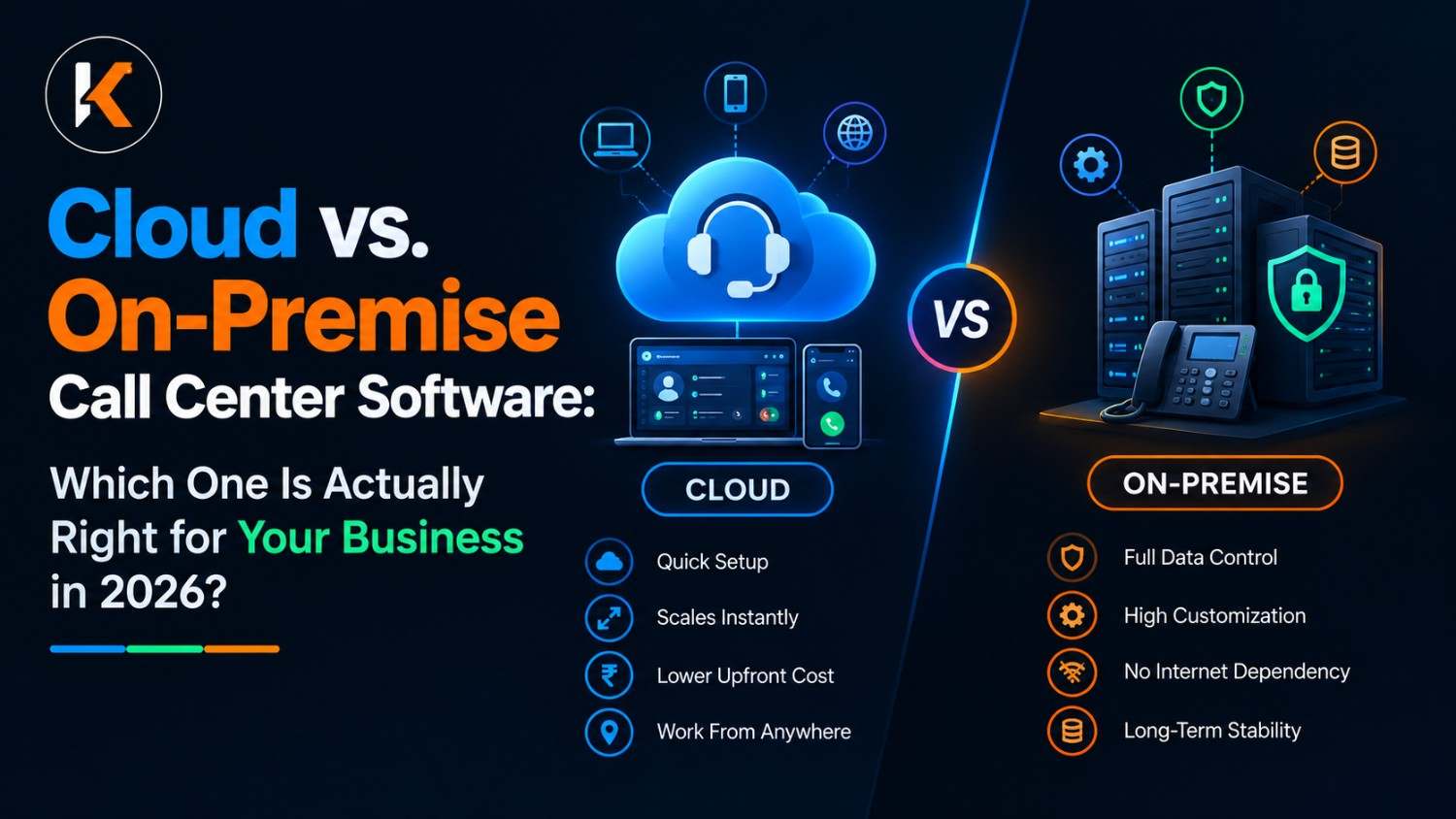
If you're evaluating call center software right now, you've probably already heard both pitches. The on-premise vendor tells you cloud isn't secure enough for "serious" operations. The cloud vendor tells you on-premise is a dinosaur. Both are selling you something — so neither answer is the one you should trust blindly.
Here's the more useful question: for an Indian call center scaling in 2026, which setup actually reduces cost, downtime, and hiring headaches — not in theory, but in the first 90 days of using it?
This comparison breaks it down the way a founder or ops head would actually need it — not as a feature checklist, but as a decision framework.
What "Cloud" and "On-Premise" Actually Mean Here
Before the comparison, a quick reset, because these terms get thrown around loosely.
On-premise call center software means your dialer, IVR, CRM integration, and call recording infrastructure all run on servers physically sitting inside your office or a data center you manage. Your IT team owns the uptime, the patches, the backups, and the disaster recovery plan.
Cloud call center software means all of that runs on your provider's infrastructure, accessed through the internet. Agents log in from a browser or a lightweight app. Scaling up (or down) is a settings change, not a hardware order.
Neither is inherently "better" as a category. The right answer depends entirely on what your call center actually needs to do in the next 12 months.
The Real Comparison: Cost
This is where most conversations start, and where most conversations get the numbers wrong.
On-premise costs are front-loaded and hidden. You're paying for servers, PRI lines, UPS backups, a server room (or rented rack space), IT staff to maintain it, and a support contract for when something breaks — usually at 11 PM on a Friday. The sticker price you're quoted is rarely the number you actually pay in year one.
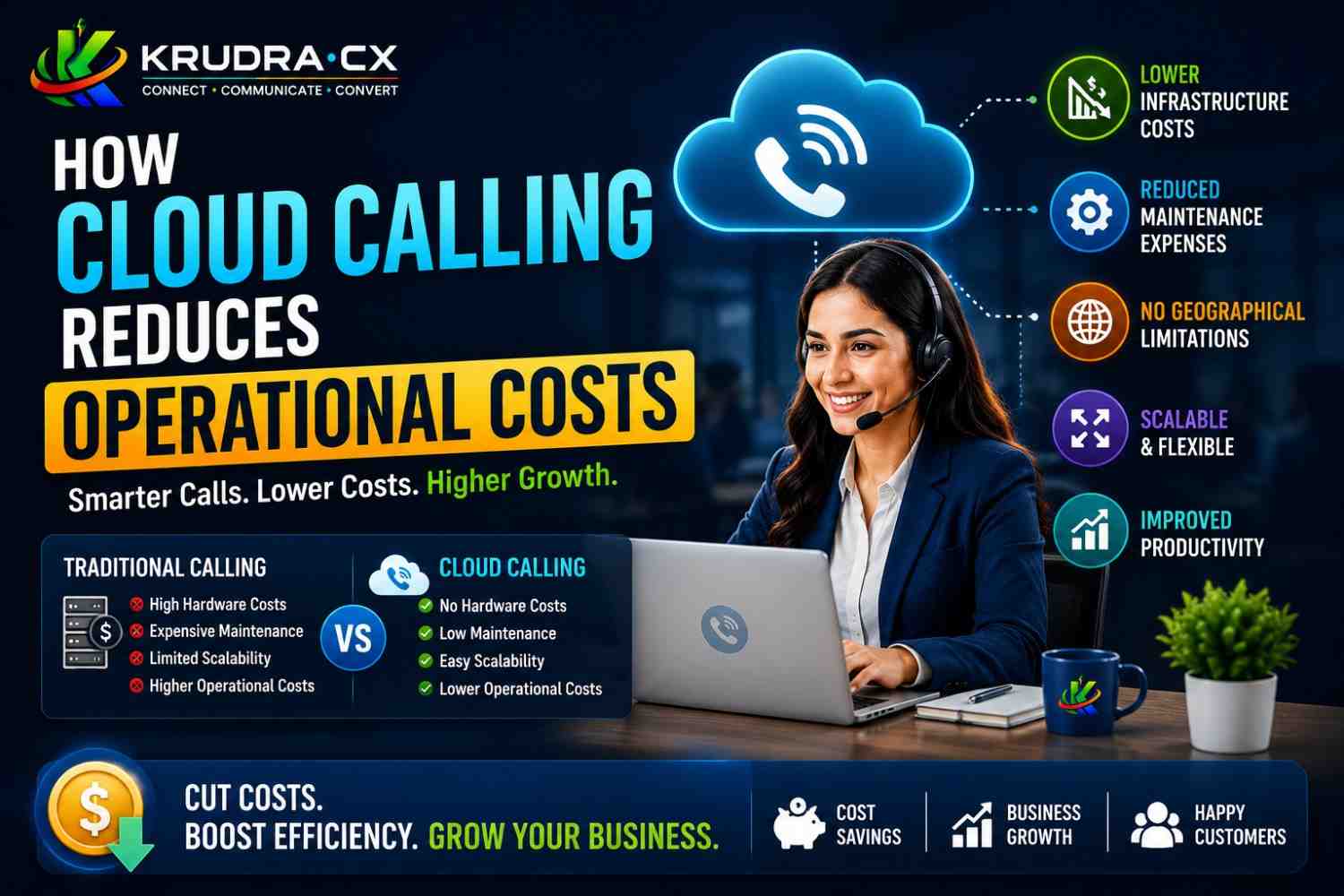
Cloud costs are distributed and visible. You pay per agent, per month, and that number includes hosting, maintenance, security patches, and most of the support burden. It looks more expensive per seat on paper — until you add up everything on-premise doesn't show you upfront.
For a 50-seat call center, the typical breakdown looks like this:
| Cost Component | On-Premise (Year 1) | Cloud (Year 1) |
|---|---|---|
| Hardware & servers | ₹8–15 lakh upfront | ₹0 |
| IT/maintenance staff | 1–2 dedicated hires | Included in subscription |
| Setup & installation time | 3–6 weeks | 1–3 days |
| Scaling 10 new seats | New hardware procurement | A few clicks |
| Disaster recovery | Separate investment | Built-in (provider-managed) |
The break-even point shifts depending on scale, but for most Indian call centers under 200 seats, cloud comes out cheaper within the first 12–18 months once hidden costs are counted.
The Real Comparison: Speed to Launch
If you're opening a new process, a new city location, or scaling for a seasonal spike — this is often the deciding factor, and it's the one on-premise loses hardest.
On-premise deployment typically takes 3 to 6 weeks: procuring hardware, running cabling, configuring servers, testing failover, training IT staff on the new system. If a vendor promises faster, ask what corners are being cut.
Cloud deployment can go live in 24 to 72 hours. Agents get login credentials, dial plans and IVR flows are configured through a dashboard, and CRM integrations are usually pre-built connectors rather than custom development.
For a business trying to capture a festive-season spike, launch a new outbound campaign, or respond to an unexpected drop in a competitor's service quality, a 5-week head start is often the difference between capturing the opportunity and watching it pass.
The Real Comparison: Scaling Up and Down
Call center volume is rarely flat. Festive seasons, product launches, collection cycles, and new client onboarding all create spikes — and just as often, dips.
On-premise scaling is a hardware decision. Adding 20 seats means checking if your server capacity supports it, possibly buying more hardware, and definitely involving IT. Scaling down is worse — you're now paying for idle infrastructure you can't easily resell or repurpose.
Cloud scaling is a licensing decision. Add seats when volume rises, release them when it falls. Most cloud call center platforms bill on active seats or usage, meaning a seasonal dip in volume actually reduces your cost automatically — something on-premise infrastructure can never do.
This matters more than it sounds. A call center running BPO or collections campaigns with monthly volume swings of 20–40% is effectively overpaying for capacity every single month it runs on-premise.
The Real Comparison: Uptime and Reliability
This is the argument on-premise vendors lean on hardest — "you control everything, so you control uptime." In practice, this control is a double-edged sword.
On-premise uptime depends entirely on your team. A power outage, a server failure, a misconfigured update — all of it is your problem to fix, in real time, while agents sit idle and customers hang up. Disaster recovery (a secondary data center, redundant lines) is expensive enough that most mid-sized call centers skip it, which means a single point of failure can take down the entire operation.
Cloud uptime is the provider's core business. Established cloud call center platforms run on redundant, geographically distributed infrastructure with contractual uptime guarantees — commonly 99.9% or higher. When something does fail, failover is automatic and usually invisible to agents and customers.
The honest caveat: cloud reliability depends on your internet connection. A call center with unstable broadband will feel this pain. The fix (a backup internet line, which costs a fraction of a backup data center) is far cheaper than the equivalent on-premise safety net.
The Real Comparison: Security and Compliance
This is genuinely the strongest on-premise argument, and it deserves a fair hearing rather than a dismissal.
On-premise gives you physical control over where data sits and who can touch the hardware — relevant for certain regulated industries or specific client contracts that mandate on-site data residency.
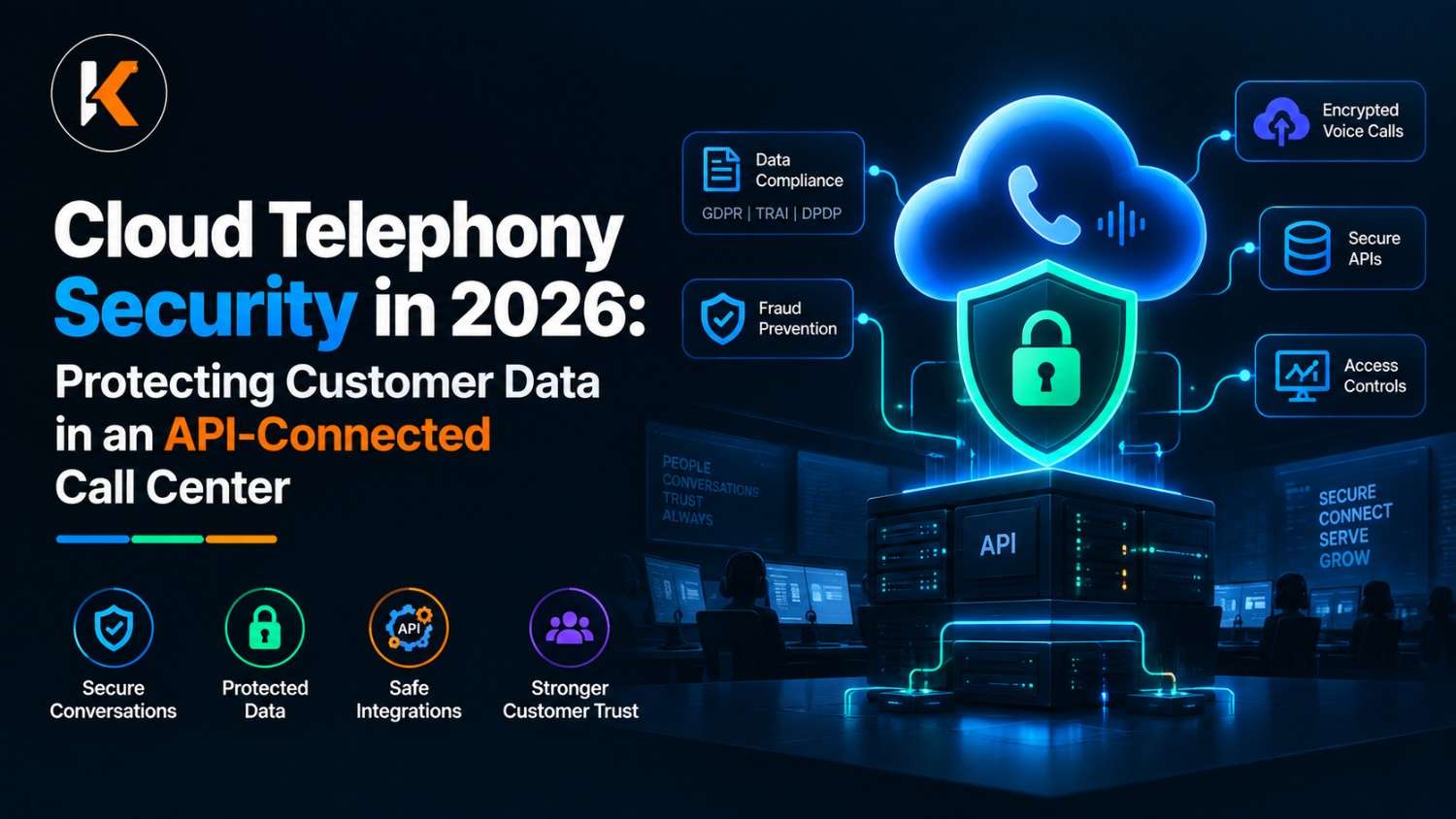
Cloud security has matured significantly, and most established providers now offer data residency options within India, encryption in transit and at rest, and compliance certifications (ISO 27001, SOC 2) that match or exceed what most mid-sized companies could build in-house on their own servers.
For most businesses — including those handling sensitive customer data like financial services or healthcare support — a reputable cloud provider's security posture is stronger than what an internal IT team of 2–3 people can realistically maintain and patch on outdated on-premise hardware. The exception is genuinely niche: government contracts or specific enterprise clients with contractual on-premise mandates.
The Real Comparison: Feature Velocity
An underrated factor: how fast does the software actually improve?
On-premise software updates are infrequent and disruptive. Major upgrades often mean scheduled downtime, IT coordination, and sometimes additional licensing costs for new features.
Cloud software updates continuously, usually without any downtime or action needed from your team. AI-based features — call sentiment analysis, auto-dialer optimization, voice analytics — reach cloud customers first, often by months or years, because providers build once and deploy to everyone simultaneously.
If your competitive edge depends on adopting new CX technology faster than competitors, this gap compounds every quarter.
So Which One Should You Actually Choose?
Choose on-premise if: you operate under a strict regulatory or contractual mandate requiring physical data control, you already have sunk investment in compliant infrastructure with years of runway left, or your call volume is large, stable, and unlikely to change — removing most of cloud's scaling advantage.
Choose cloud if: you're scaling, launching new locations or campaigns, dealing with seasonal or unpredictable volume, want to control cost per seat precisely, or want new CX features (like AI-based call analytics) without waiting for a manual upgrade cycle. For most growing Indian call centers in 2026, this describes the majority of operations.
On-premise call center software isn't obsolete — but it's increasingly the choice you make when you have a specific, narrow reason to make it, not the default anymore. Cloud has closed the security gap, beaten on-premise decisively on cost and speed, and pulled ahead permanently on features and scalability.
The businesses still running on-premise in 2026 are mostly running it because switching feels risky, not because on-premise is winning on merit. That's a migration decision worth revisiting — before a competitor running cloud infrastructure launches a new campaign in 48 hours while your team is still waiting on a hardware order.
Want to see what a cloud call center setup actually looks like for your team's volume and use case ? Book a free demo with KRUDRA-CX and get a side-by-side cost comparison built around your actual seat count — not a generic pricing sheet.