From Answering Questions to Completing Tasks :
For the last few years, "AI in customer service" mostly meant chatbots and voice bots that could answer questions — check a balance, explain a policy, route a call. Useful, but fundamentally reactive: the AI responded, and a human still had to act on the outcome.
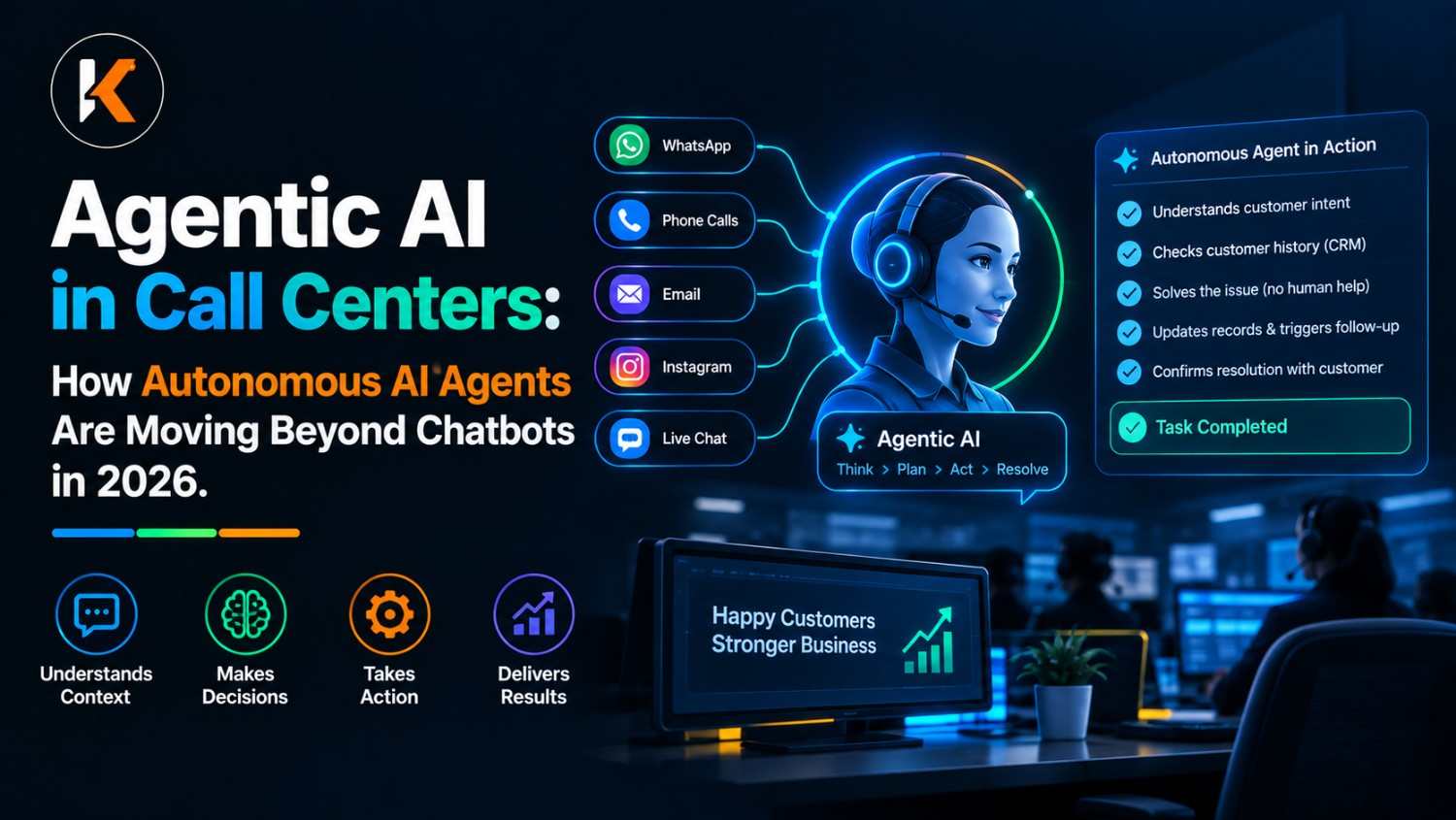
2026 marks a shift toward something structurally different: agentic AI — systems that don't just converse, but autonomously execute multi-step tasks across connected systems, with minimal human intervention. Instead of telling a customer "your refund request has been noted," an agentic AI system verifies eligibility, processes the refund through the payment API, updates the CRM, and sends confirmation — all in one autonomous workflow.
This is the difference between an AI that talks and an AI that actually does the job.
What Makes AI "Agentic" — Technically
The term gets used loosely, so it's worth being precise about the underlying architecture:
Goal-directed reasoning, not scripted flows
Traditional IVR and even conversational AI follow decision trees — if X, then Y. Agentic AI is given a goal ("resolve this customer's billing dispute") and reasons through the steps needed to achieve it, dynamically deciding which systems to query and in what order, rather than following a pre-built path.
Tool use and API orchestration
An agentic system doesn't just generate a response — it calls tools. It might query the CRM API to check account history, call the billing API to verify a charge, then call the refund API to process a resolution — chaining multiple API calls autonomously based on what it discovers at each step.
Multi-step task completion
Where a chatbot answers one query at a time, an agentic system can execute an entire workflow — verify identity, diagnose the issue, take corrective action, and confirm resolution — without handing off to a human between each step, unless a defined condition requires it.
Memory and context persistence across a task
Agentic systems maintain working memory throughout a multi-step process, so if step three reveals new information, it can revise the approach for steps four and five — rather than treating each interaction as stateless.
Where Agentic AI Delivers Real Value in Call Centers
Autonomous resolution of structured, rules-based tasks
Refund processing, address updates, subscription changes, appointment rescheduling — tasks with clear rules and defined systems to interact with are ideal candidates for full agentic automation, freeing agents entirely from high-volume, low-complexity work.
Proactive outreach and follow-through
Rather than waiting for a customer to call about a failed payment, an agentic system can detect the failure via API, autonomously attempt resolution (retry payment, send a WhatsApp reminder with a payment link), and only escalate to a human if the autonomous attempt fails.
Cross-system reconciliation
When a customer's issue spans multiple systems — a payment discrepancy that involves the CRM, the payment gateway, and the ticketing system — agentic AI can autonomously cross-reference all three, identify the discrepancy, and resolve or accurately escalate it with full context already assembled.
Agent augmentation for complex cases
For issues too nuanced for full automation, agentic AI can still autonomously gather and organize relevant data from every connected system before handing off to a human agent — turning a 10-minute information-gathering phase into a pre-assembled case file.
The Architecture Required to Support This
Agentic AI is far more demanding on infrastructure than conversational AI alone:
1. Comprehensive, well-documented APIs across every system
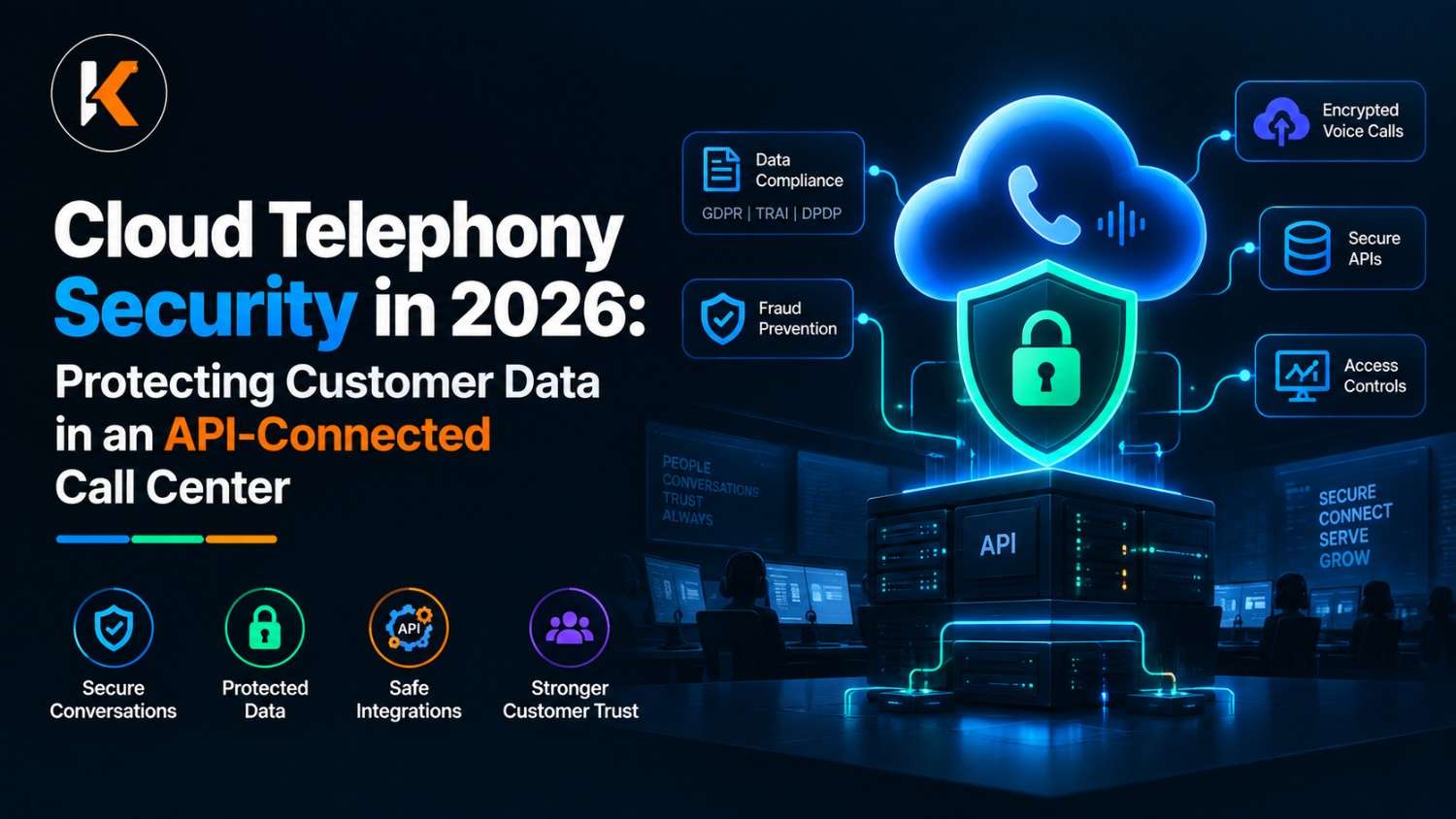
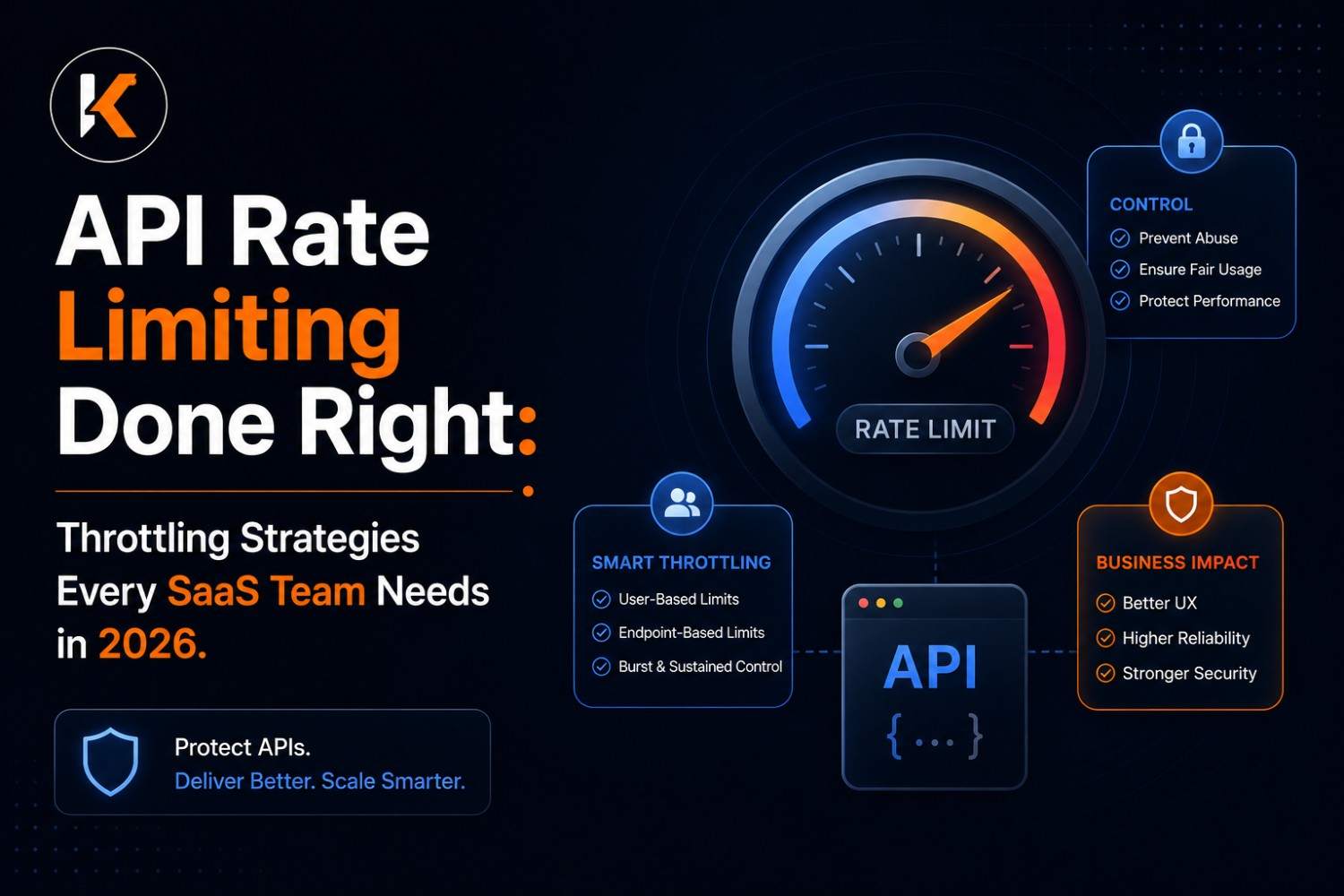
An agentic system can only take autonomous action through APIs it can reliably call. This means CRM, billing, ticketing, and payment systems all need robust, well-structured APIs — not just for reading data, but for executing actions (refunds, updates, cancellations) securely.
2. Permission and guardrail layers
Autonomous action requires strict boundaries. The architecture needs explicit rules about what an AI agent can do unsupervised (send a confirmation message) versus what requires human approval (process a refund above a certain threshold) — enforced at the system level, not just in the AI's instructions.
3. Action logging and reversibility
Every autonomous action needs to be logged with full context — what triggered it, what data it used, what it changed — and ideally reversible, since an AI system executing real actions (not just generating text) can make real mistakes that need to be undone quickly.
4. Real-time monitoring and circuit breakers
If an agentic system starts behaving unexpectedly — looping, taking incorrect actions repeatedly — there needs to be automatic detection and a kill switch, similar to how financial systems handle runaway algorithmic trading.
The Risk Side Nobody Should Skip
Agentic AI's power — autonomous action — is also its biggest risk. A few considerations enterprises need to take seriously:
- Error amplification. A conversational AI giving a wrong answer is a bad experience. An agentic AI taking a wrong autonomous action — issuing an incorrect refund, canceling the wrong subscription — is a real operational and financial error.
- Compliance and consent. In BFSI specifically, autonomous financial actions need clear regulatory grounding — customers may need explicit consent before an AI system executes account changes, not just informs them of possibilities.
- Explainability requirements. When an agentic system takes an action, there needs to be a clear, auditable trail of why — both for internal review and for regulatory scrutiny, since "the AI decided to" isn't an acceptable answer in a compliance audit.
- Escalation thresholds. Systems need well-calibrated boundaries for when to act autonomously versus when to defer to a human — set too loose, and errors compound; set too tight, and the automation delivers little value.
A Practical Path to Adoption
Enterprises don't need to jump straight to full autonomy. A staged approach works better:
- Start with read-only agentic reasoning — let the AI gather and synthesize information across systems, but require human approval before any action executes.
- Automate low-risk, high-volume, reversible actions first — things like sending reminders or updating non-sensitive account details.
- Expand autonomy incrementally, based on measured accuracy and error rates, into higher-stakes actions like refunds or cancellations.
- Maintain human-in-the-loop escalation for anything involving financial thresholds, sensitive data changes, or ambiguous customer intent — permanently, not just during a pilot phase.
What to Evaluate in an Agentic-AI-Ready Platform
- Does the platform expose action-capable APIs (not just read access) across CRM, billing, and ticketing systems?
- Are there configurable guardrails limiting what actions AI can take autonomously versus what requires approval?
- Is every autonomous action logged with full context and reversible where possible?
- Does the platform support real-time monitoring and an emergency override for AI-driven workflows?
- Are compliance and consent requirements for autonomous actions built into the architecture, not left to manual policy?
The Shift Ahead
Agentic AI represents a genuine architectural shift for call centers — from systems that assist conversations to systems that complete work. The businesses that will benefit most aren't the ones rushing to automate everything, but the ones building the API infrastructure, guardrails, and monitoring needed to deploy autonomy safely and incrementally.
The call centers that get this right in 2026 won't just answer customers faster — they'll resolve entire issues before a human ever needs to get involved, while keeping the oversight needed to catch it when something goes wrong.
See the API-integrated infrastructure that makes advanced AI automation possible.
Download our free Company Profile to explore how KRUDRA-CX's IVR, CRM, and API-integration-ready platform is built to support the next generation of intelligent, automated customer experience — trusted by 500+ enterprises.