The Illusion of "Multichannel"
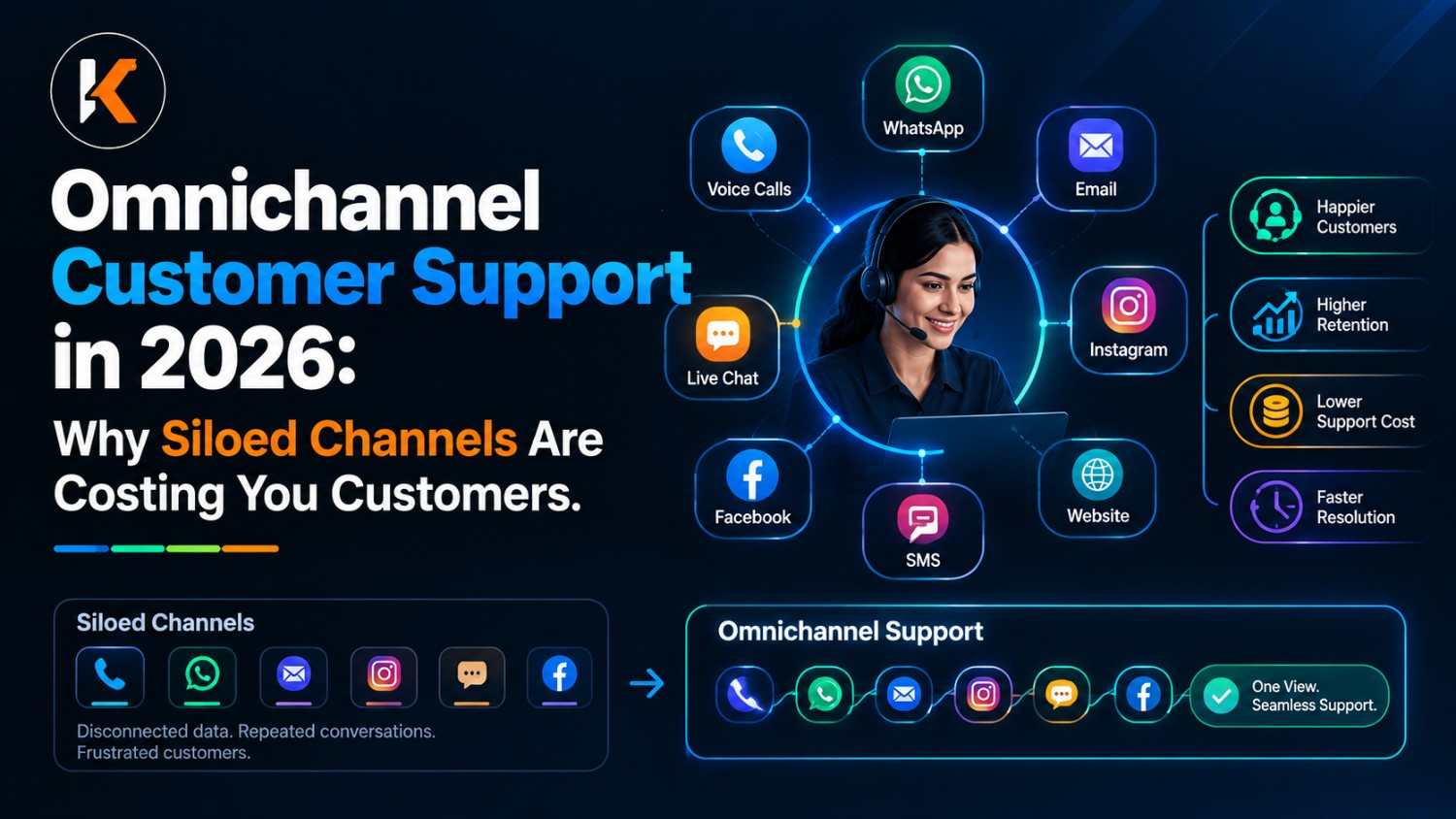
Most businesses believe they already offer omnichannel support because they have a phone line, a WhatsApp number, an email inbox, and a chat widget. But offering multiple channels isn't the same as offering an omnichannel experience. The difference lies entirely in the architecture behind those channels — specifically, whether they're connected or isolated.
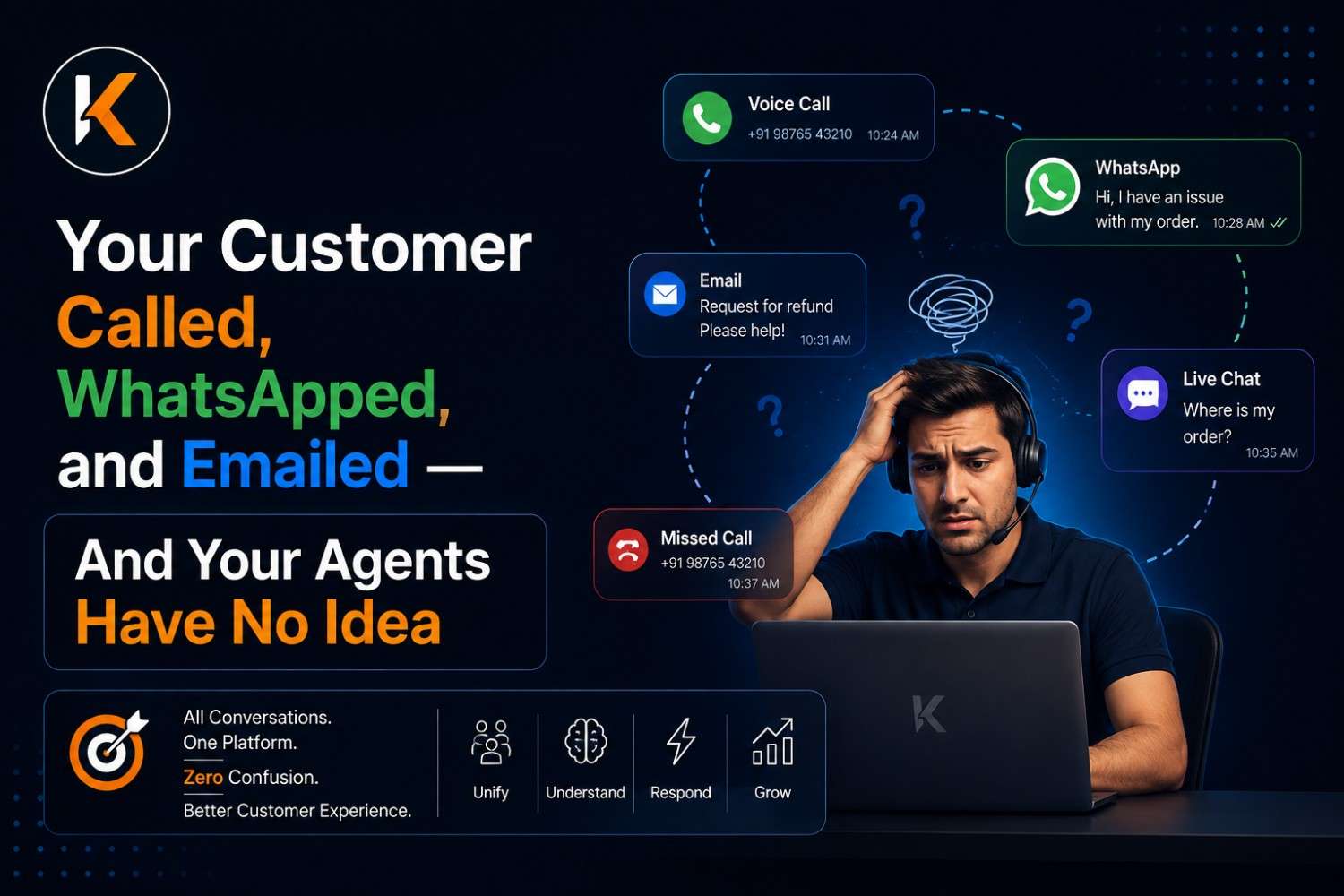
In a true multichannel (not omnichannel) setup, a customer who calls support, then follows up on WhatsApp, then emails a screenshot, is treated as three separate, disconnected interactions. Each channel has its own queue, its own agent, and often its own system of record. The customer repeats their issue three times. The business has no unified view of what actually happened.
This isn't a minor UX inconvenience — it's a structural failure that directly drives churn.
What Omnichannel Actually Requires, Technically
True omnichannel support isn't a frontend feature — it's a backend integration problem. It requires:
1. A unified customer identity layer
Every channel — voice, WhatsApp, email, web chat — needs to resolve to the same customer record via API, in real time. If your WhatsApp integration and your call center dialer don't share a common customer ID system, you cannot build a unified timeline, no matter how good either tool is individually.
2. A single interaction history, regardless of channel
Agents need to see the full thread — the call transcript from Monday, the WhatsApp message from Tuesday, the email from Wednesday — in one place, not scattered across three dashboards. This requires all channel data to flow into a shared CRM or ticketing layer through consistent API integration, not manual exports.
3. Context-aware routing
When a customer who called yesterday messages on WhatsApp today, the system should route them based on that history — ideally to the same agent or team, with full context — rather than treating it as a fresh, anonymous inquiry.
4. Real-time state synchronization
If an issue is marked "resolved" on a call, that status needs to update instantly across every channel. Otherwise, a customer might get an automated WhatsApp follow-up on an issue that's already closed — a small detail that erodes trust in the system.
WhatsApp Business API: The Channel Businesses Can't Ignore
In India specifically, WhatsApp has become a primary customer service channel, not a secondary one. Integrating WhatsApp Business API into a call center platform introduces specific technical considerations:
- Session vs. template messaging. WhatsApp enforces strict rules — free-form replies are only allowed within a 24-hour customer-initiated session window; outside that, businesses must use pre-approved template messages. Your platform needs to track this window automatically per conversation.
- Two-way sync with the dialer and CRM. A WhatsApp conversation should be able to trigger a callback request, sync to the same CRM record as a phone interaction, and show up in the same agent dashboard as voice calls.
- Media and document handling. Customers frequently send screenshots, ID documents, or payment proofs via WhatsApp — these need to be stored, tagged, and made searchable within the same system as call recordings and email attachments.
- Compliance logging. For BFSI use cases, WhatsApp interactions involving sensitive account information need the same audit trail rigor as recorded phone calls.
Voice Still Matters — It Just Needs to Talk to Everything Else
Despite the rise of chat-based channels, voice remains critical for complex, high-stakes, or emotionally charged interactions — customers escalate to a phone call when they're frustrated or the issue is serious. The mistake many businesses make is treating voice as the "legacy" channel and under-investing in its integration.
In a well-architected omnichannel system:
- IVR pulls the same customer data used across WhatsApp and chat, so callers aren't re-authenticating or re-explaining context the system already has.
- Predictive dialers can incorporate channel engagement data — for example, deprioritizing outbound calls to a customer who's actively resolving their issue over WhatsApp at that moment.
- Call recordings and transcripts feed into the same searchable interaction history as chat logs, so QA and analytics cover every channel uniformly, not just voice.
Real-Time Analytics Across Channels
Omnichannel platforms need analytics that aggregate across every touchpoint, not per-channel dashboards that require manual stitching. Key metrics to track holistically include:
- Cross-channel resolution time — how long from first contact (any channel) to final resolution, regardless of how many channels were involved
- Channel-switching patterns — which issues cause customers to escalate from chat to voice, signaling where self-service or chat AI is falling short
- Agent load balancing across channels — ensuring agents handling WhatsApp aren't overloaded while voice queues sit empty, or vice versa
- First-contact resolution rate, measured per customer journey, not per isolated channel session
Without unified analytics, businesses often can't even see that their channels are siloed — the data looks fine per-channel while the actual customer experience is fragmented.
The Compliance Layer for Multi-Channel Data
Regulated industries face a specific challenge: every channel generates data that needs to be governed consistently.
- Consent tracking needs to apply uniformly — if a customer opts out of WhatsApp marketing messages, that preference should also affect email and voice outreach, not exist in a separate silo.
- Data retention policies must apply equally to call recordings, WhatsApp media, and email attachments — inconsistent retention across channels creates audit gaps.
- Identity verification standards should be consistent, whether a customer is verified via IVR PIN entry or WhatsApp OTP — different bars for different channels create security inconsistencies.
Common Pitfalls in Omnichannel Rollouts
- Buying point solutions instead of an integrated platform. Adding a separate WhatsApp tool, a separate chat widget, and a separate dialer — each with its own vendor and API — often recreates the silo problem with extra steps.
- Underestimating identity resolution. If a customer uses a different phone number for WhatsApp than the one on file for calls, the system needs logic to reconcile this — otherwise "omnichannel" breaks down at the first mismatch.
- Treating channels as equal-priority by default. Not every channel needs the same SLA — a WhatsApp message might reasonably wait minutes, while a dropped call needs immediate reconnection. Routing logic needs channel-aware prioritization.
- Ignoring agent tooling. Agents switching between five different interfaces to handle one customer's journey across channels defeats the purpose — the unification needs to happen in the agent's workspace, not just in the backend data.
What to Evaluate Before You Build (or Buy)
- Does the platform maintain a single customer identity across voice, WhatsApp, chat, and email — via real API integration, not manual linking?
- Can agents see a unified interaction history regardless of which channel they're working in?
- Does WhatsApp Business API integration handle session windows, media, and compliance logging natively?
- Are analytics aggregated across channels, or do they require manual reconciliation?
- Is consent and compliance tracking consistent across every channel, or does each channel manage it separately?
Bringing It Together
Omnichannel isn't about adding more communication channels — it's about connecting the ones you already have into a single, coherent system where customer identity, interaction history, and compliance data flow seamlessly across voice, WhatsApp, chat, and email. Businesses that get this right reduce repeat contacts, cut resolution time, and give agents the context they need to resolve issues on the first try — regardless of which channel the customer chose.
See how a truly integrated, omnichannel-ready platform is architected.
Download our free Company Profile to explore how KRUDRA-CX connects voice, IVR, CRM, and API integrations into one unified system — trusted by 500+ enterprises, including leading banks that can't afford fragmented customer data.