Introduction: The Word Everyone Uses and Almost Nobody Delivers
Ask any company today whether they offer omnichannel support, and almost all of them will say yes. They have a phone line, an email inbox, a live chat widget, a WhatsApp number, maybe a presence on Instagram DMs. By that definition, "omnichannel" has become nearly universal.
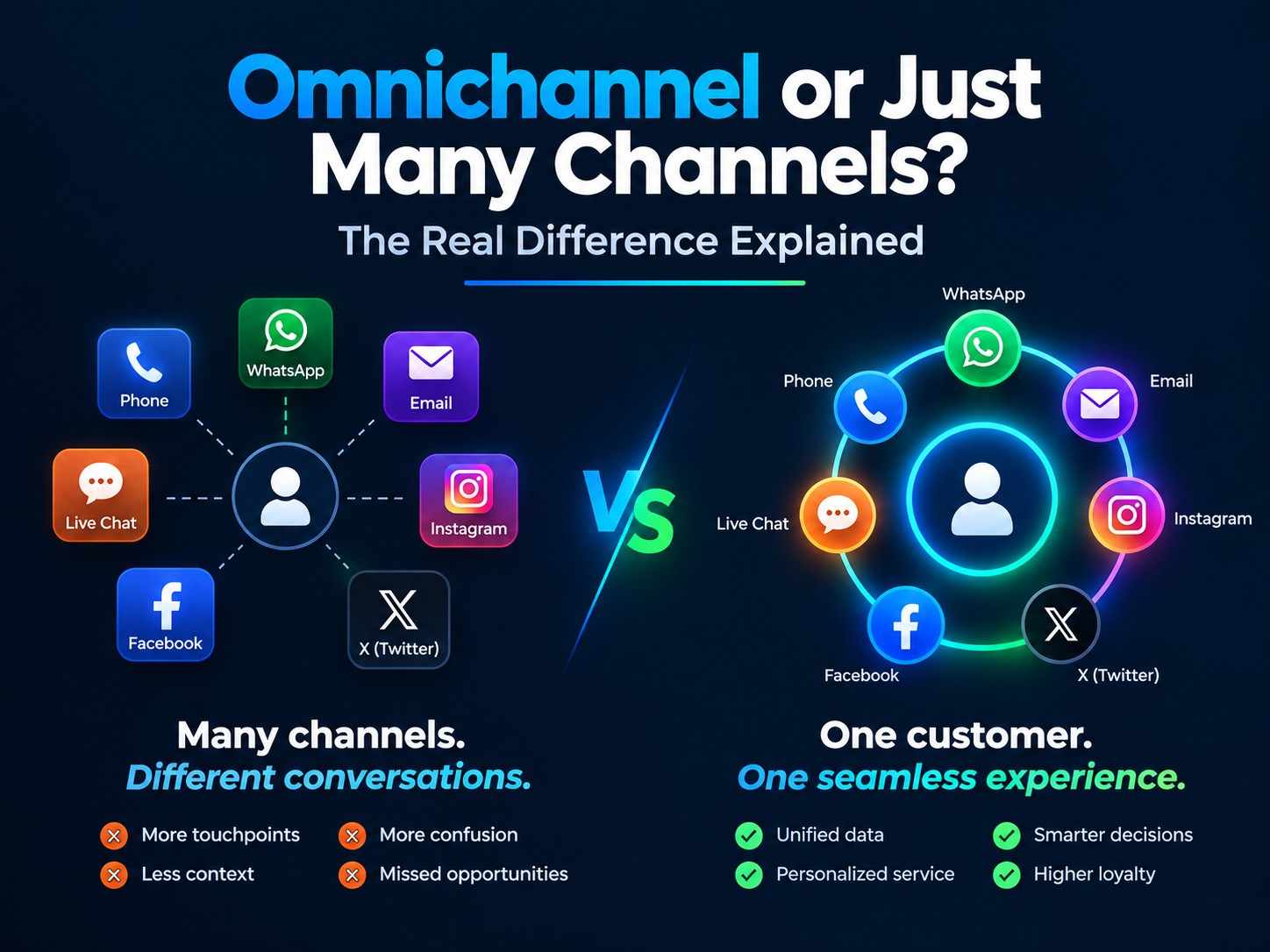
It's also, in most cases, wrong. What most of these businesses actually have is multichannel support — multiple separate channels that all technically work, but don't talk to each other. A customer who emails about an issue and then calls to follow up is treated as two different conversations, sometimes by two different agents, neither of whom has the full picture. That's not omnichannel. That's just more channels stacked on top of a fragmented experience.
The distinction isn't semantic. It's the difference between a customer feeling like they're dealing with one company that knows them, versus feeling like they're starting over every time they switch how they reach out. And in a market where customers routinely use two or three different channels to resolve a single issue, that difference shows up directly in resolution time, satisfaction, and whether a customer sticks around.
Multichannel vs. Omnichannel: The Actual Definitions
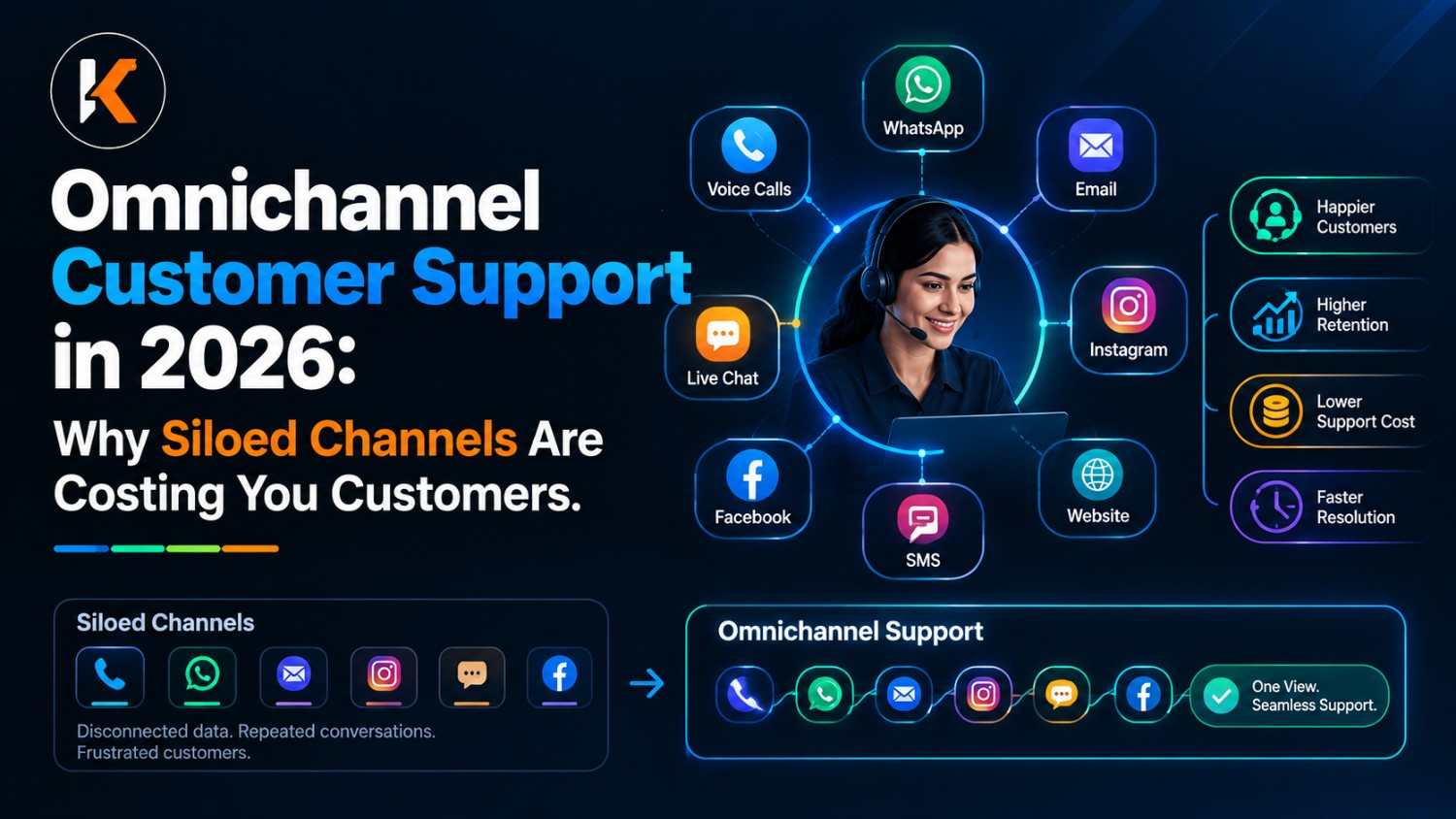
Multichannel means a business is reachable through several separate channels — phone, email, chat, social media — each operating as its own silo. The channels exist in parallel, often on different platforms, sometimes managed by different teams, with no shared customer history between them. A customer's chat conversation and their phone call are treated as two unrelated events, even if they're about the exact same issue.
Omnichannel means those same channels are unified around a single, continuous view of the customer. Whichever channel a customer starts on, whichever channel they switch to, and whichever agent picks up the conversation, the full context follows them — what they asked before, what was already tried, what the resolution status is. The channel is just the doorway; the conversation and the data behind it stay whole.
Most businesses that believe they're omnichannel are actually running a well-staffed multichannel operation. The channels are good. The connective tissue between them is missing.
Why This Gap Is So Easy to Miss Internally
From inside the business, the multichannel setup often looks perfectly fine. Every channel has an owner. Every channel has its own metrics — response time, resolution rate, CSAT — and every channel hits reasonable targets on its own. Leadership sees green across every dashboard and reasonably assumes the customer experience is solid.
The problem only becomes visible from the customer's side, and specifically for the subset of customers who move between channels mid-issue. If most customers resolve their problem in a single channel on the first try, the fragmentation never surfaces. But the moment a customer emails, doesn't hear back fast enough, and calls in to follow up — or starts a chat, gets disconnected, and has to explain everything again by phone — the cracks appear immediately, and they appear in exactly the interactions that already carry the most frustration.
This is why fragmentation is so persistent: the metrics that would reveal it usually aren't being tracked, because each channel is measured in isolation rather than as part of one continuous customer journey.
The Real-World Symptoms of Fake Omnichannel
1. Customers Have to Repeat Themselves
This is the most immediate, most noticeable symptom. A customer explains their issue in a chat, gets escalated to phone, and the agent who picks up has no record of the conversation — so the customer explains it all again, sometimes for a third time if it escalates further. Every repetition erodes patience and signals to the customer that the company doesn't actually have its systems connected, whatever the marketing says.
2. Resolution Status Gets Lost Between Channels
A customer opens a support ticket via email, gets a partial answer, then calls to ask a follow-up question. If the phone agent can't see the email thread, they may re-diagnose the issue from scratch, sometimes giving contradictory information to what was already sent — undermining trust in both channels at once.
3. Channel-Switching Resets the Clock
In a fragmented system, first response time and resolution time often get calculated per channel, meaning a customer who's been waiting three days across two channels for the same issue shows up in reporting as two separate, well-within-SLA interactions — even though their actual experience was a three-day wait.
4. Agents Can't See the Full Relationship
Even when a single channel is handled well, an agent without visibility into a customer's history across all channels is working with an incomplete picture. A customer who's contacted support five times this month about related issues deserves a different kind of handling than a first-time contact — but that context is invisible if channels don't share data.
5. Self-Service and Live Support Don't Sync
A customer who searches the help center, doesn't find an answer, and then contacts support directly often has to describe the entire problem from zero, even though their search history could have told the agent exactly what they'd already tried and ruled out.
What True Omnichannel Actually Requires
1. A Unified Customer Data Layer
The foundational requirement is a single source of truth for customer interactions — usually built on a CRM or customer data platform — that every channel writes to and reads from in real time. Without this, no amount of channel expansion will produce a genuinely connected experience; it will only add more disconnected touchpoints.
2. Context That Follows the Conversation, Not Just the Ticket Number
It's not enough for a ticket ID to technically link an email and a phone call in the backend. The agent handling the second contact needs to actually see the relevant history — what was asked, what was tried, what's still outstanding — surfaced automatically, not buried in a system they'd have to dig for.
3. Consistent Information Across Every Channel
If a customer gets one answer via chatbot and a different answer by phone, the channels are functioning independently rather than as extensions of the same knowledge base. True omnichannel requires every channel — human and automated — to draw from the same, continuously updated source of truth.
4. Seamless Handoffs Between Automated and Human Support
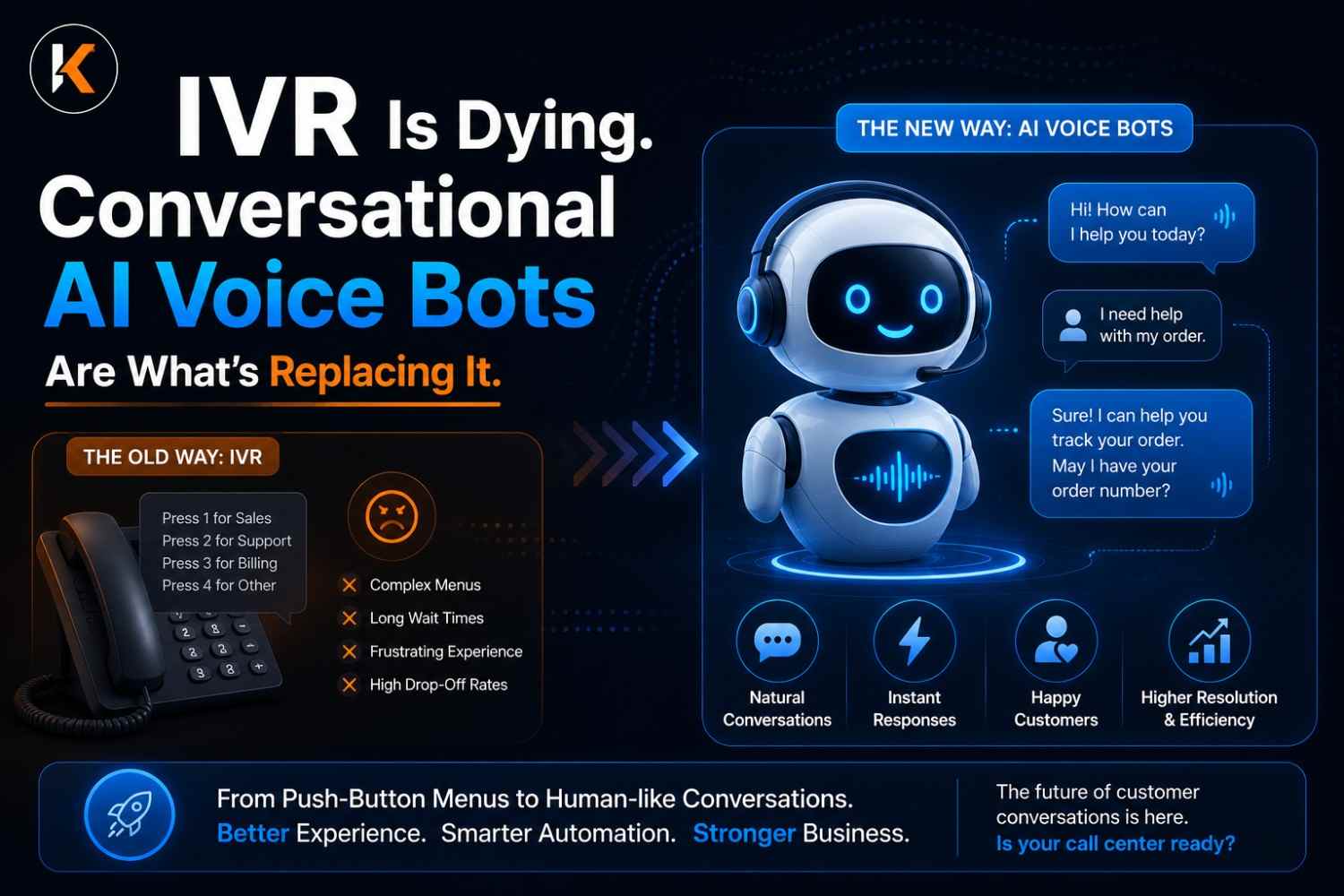
Many companies use chatbots or IVR as a first layer before human agents. In a fragmented setup, escalating from bot to human means starting over. In a true omnichannel setup, everything the customer told the bot transfers directly to the human agent, so the handoff feels like a continuation, not a restart.
5. Channel-Agnostic Metrics
Resolution time, first-contact resolution, and repeat contact rate need to be measured across the full customer journey, not per channel. A business needs to know how long it actually took a customer to get their issue solved — even if that meant three touchpoints across two channels — not just how each channel performed in isolation.
The Business Case for Closing the Gap
Fixing channel fragmentation isn't just a customer experience nicety — it shows up in metrics leadership already cares about.
Lower repeat contact volume. When agents have full context regardless of channel, fewer issues require a customer to re-explain or re-initiate contact, directly reducing overall ticket and call volume.
Faster true resolution times. Measuring and managing the full cross-channel journey — rather than optimizing each channel independently — tends to surface and eliminate the handoff delays that inflate real resolution time even when individual channel SLAs look fine.
Higher customer retention. Customers who experience a disjointed, repetitive support journey are measurably more likely to churn than those whose issue was handled as one continuous conversation, regardless of how many channels it touched.
Better agent efficiency. Agents who aren't forced to reconstruct context from scratch on every interaction spend less time on redundant diagnosis and more time actually resolving the issue — improving both handle time and quality simultaneously, rather than trading one for the other.
How to Move From Multichannel to Omnichannel Without a Total Overhaul
Closing this gap doesn't require ripping out every existing tool and starting over. A phased approach works for most organizations:
Start by mapping where customers actually switch channels. Before investing in a full unification project, identify the specific journeys where channel-switching happens most often — a common escalation path from chat to phone, for example — and prioritize connecting those first.
Centralize customer interaction data before centralizing every workflow. Even a partial integration — where agents across channels can see a shared interaction timeline — delivers most of the customer-facing benefit long before every system is fully unified on the backend.
Standardize the knowledge base every channel pulls from. Whether it's a chatbot, an IVR script, or a live agent, make sure all of them reference the same, single source of truth for common answers, so consistency doesn't depend on which channel a customer happens to use.
Redefine success metrics around the full journey. Shift reporting to track resolution time and repeat contact rate at the customer-issue level, not the channel level, so fragmentation becomes visible in the data instead of hiding behind individually healthy channel metrics.
Pilot full handoffs on your highest-volume escalation path first. Rather than attempting a company-wide rollout at once, prove the model on the single most common channel-switch pattern, measure the impact, and expand from there.
Having a lot of channels isn't the same as being omnichannel, and the gap between the two is invisible right up until a customer has to move between them — at which point it becomes the exact moment their patience runs out. Multichannel support looks identical to omnichannel support on a company's website. It looks completely different from inside a customer's actual experience.
The businesses that close this gap aren't necessarily adding more channels. They're connecting the ones they already have, so that wherever a customer reaches out, whoever picks up, and however many times they have to follow up, the conversation stays whole. That's not a nice-to-have anymore — it's quickly becoming the baseline customers expect, whether or not a company has actually built it.
Ready to Find Out If You're Really Omnichannel?
If your channels can't see each other, your customers are the ones paying for it — with repeated explanations, lost context, and slower resolutions. KrudraCX helps businesses connect their support channels into one continuous, customer-first experience, not just a longer list of ways to get in touch.
👉 Partner with KrudraCX today and turn your scattered channels into one seamless support experience.
Visit www.krudracx.com and stop making your customers repeat themselves.