The Attack Surface Nobody Talks About
When businesses evaluate call center platforms, security often gets a checkbox mention — "yes, we're encrypted, yes, we're compliant." But a modern, API-integrated cloud telephony platform has a far larger attack surface than a traditional on-premise PBX ever did. Every integration point — the CRM sync, the WhatsApp connector, the payment gateway link, the analytics dashboard — is a potential entry point for a breach.
For BFSI and enterprise clients handling millions of customer interactions, a security failure isn't just a technical incident. It's a regulatory event, a trust event, and often a headline.
Where the Real Risks Live
1. API endpoints as the primary vulnerability
Every integration — dialer to CRM, IVR to payment gateway, WhatsApp to ticketing — runs through an API call. Each of these endpoints needs authentication, encryption in transit, and strict payload validation. A poorly secured API integration is often the weakest link, not the dialer or the phone network itself.
2. Call recordings and voice data at rest
Recorded calls frequently contain sensitive data — account numbers, OTPs, identity verification details. If recordings aren't encrypted at rest with proper key management, they become a high-value target sitting in storage long after the call ends.
3. Agent-level access sprawl
In large call centers, agents often have broader system access than their role requires — able to view customer data unrelated to their current call. This isn't just a security gap; it's a compliance violation waiting to surface in an audit.
4. Third-party integration risk
Every connected system — CRM, payment processor, lead source — extends your security perimeter to include theirs. A vulnerability in a poorly secured third-party integration can expose your customer data even if your own platform is airtight.
Core Security Architecture Requirements
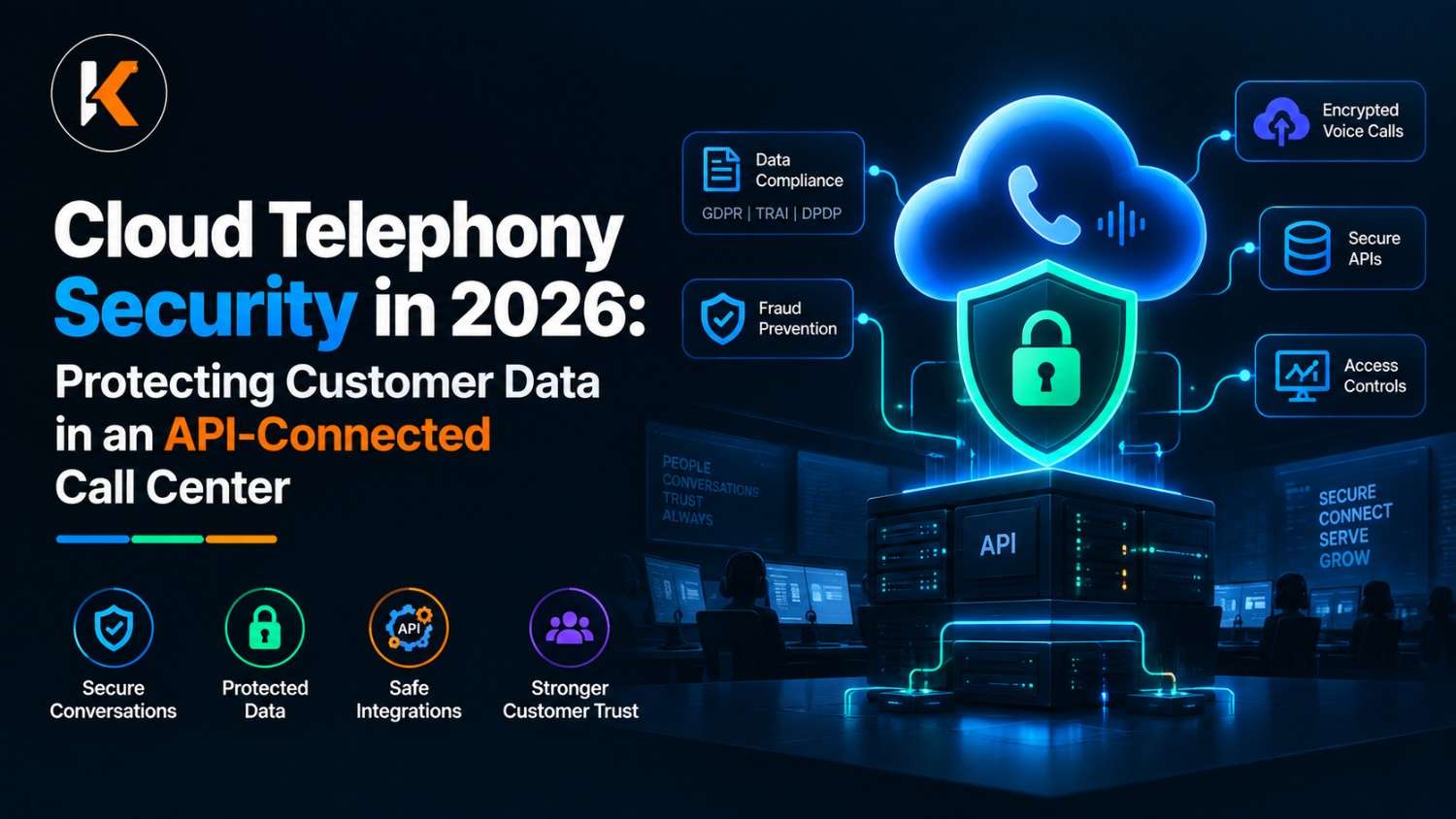
Encryption in transit and at rest
Every piece of customer data — voice recordings, chat transcripts, CRM records — needs to be encrypted both while moving between systems (TLS for API calls) and while stored (AES-256 or equivalent for databases and recordings). This isn't optional infrastructure; it's baseline.
Role-based access control (RBAC)
Access to customer data should be scoped precisely to what a role needs — an agent handling billing queries shouldn't have visibility into unrelated account details. RBAC needs to be enforced at the API level, not just the UI level, since a determined actor could otherwise bypass frontend restrictions.
API authentication and rate limiting
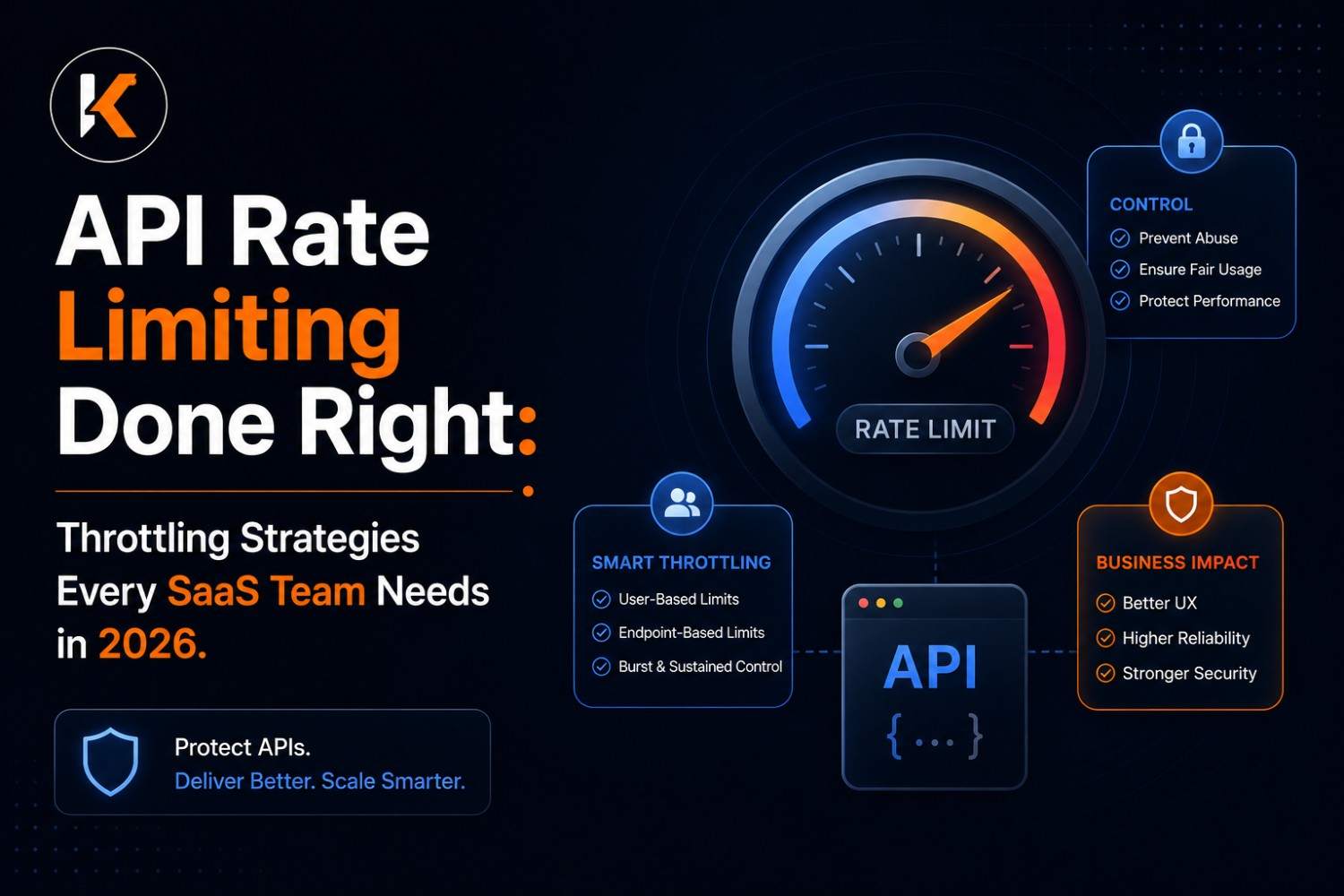
Every API integration point needs token-based authentication (OAuth 2.0 or equivalent), combined with rate limiting to prevent abuse — both from external attackers and from misconfigured internal integrations that could inadvertently overload or expose an endpoint.
Audit logging on every data access event
Every time customer data is viewed, exported, or modified — whether by an agent, a supervisor, or an automated process — it needs to be logged with a timestamp, user ID, and action taken. This is what makes a security incident investigable, and what regulators require during audits.
Network segmentation
Call center infrastructure should be segmented so that a breach in one component (say, a marketing integration) can't cascade into access over core systems like the CRM or payment processing layer.
Compliance Frameworks That Matter for Indian Call Centers
For BFSI and enterprise call centers operating in India, several frameworks shape security requirements:
- RBI guidelines on data localization and BFSI security, which govern where and how financial customer data can be stored and processed.
- PCI DSS, relevant for any call center handling card payment details, even indirectly through IVR-based payment collection.
- IT Act and data protection provisions, which set baseline requirements for handling personal data and breach notification.
A platform built for enterprise and BFSI clients needs these baked into its architecture, not retrofitted after a client asks about compliance during procurement.
Securing Voice-Specific Risks
Voice channels introduce security considerations that text-based channels don't:
- IVR-based authentication risks. If IVR uses PIN or OTP verification, the system needs protection against brute-force attempts — rate limiting failed attempts and flagging suspicious patterns, similar to login security on a web app.
- Call spoofing and vishing protection. As voice phishing (vishing) attacks grow more sophisticated, platforms need caller verification mechanisms and should support features like STIR/SHAKEN-style call authentication where applicable.
- Recording redaction. Sensitive data spoken during a call — like a card number read aloud for verification — should be automatically detected and redacted or masked in stored recordings, rather than existing as a permanent liability in plain audio.
What a Security Incident Response Actually Requires
Even with strong architecture, incident response readiness matters:
- Real-time anomaly detection — unusual data access patterns (an agent exporting an unusually large customer list, for example) should trigger automatic alerts, not be discovered in a monthly review.
- Clear breach notification workflows — regulatory timelines for reporting incidents are strict, and platforms need built-in logging that makes rapid investigation possible rather than a forensic scramble.
- Regular penetration testing — API integrations, in particular, should be tested regularly, since new integrations are often added faster than security reviews keep pace.
Common Security Gaps in Call Center Platforms
- Treating security as a vendor's problem alone. Even with a secure platform, misconfigured integrations or overly broad agent permissions on the client side can create vulnerabilities the vendor can't control.
- Underestimating third-party integration risk. Every new CRM, payment gateway, or marketing tool connected via API expands the attack surface — each needs its own security review, not a blanket assumption of safety.
- Inconsistent encryption across channels. Voice recordings encrypted properly while WhatsApp media or email attachments are stored with weaker protections creates an inconsistent, exploitable gap.
- Delayed patching of integration dependencies. APIs and SDKs used for CRM or payment integrations need regular updates — outdated dependencies are a common entry point for known exploits.
What to Ask a Call Center Vendor About Security
- Is data encrypted both in transit and at rest, across every channel — not just voice?
- Is access control enforced at the API level, with role-based restrictions?
- How are API integrations authenticated, and is rate limiting applied?
- What audit logging exists for data access, and how long are logs retained?
- What compliance certifications or frameworks does the platform explicitly support for BFSI and enterprise use?
Security as a Foundation, Not an Add-On
As call center platforms become more connected — more APIs, more channels, more integrations — security can't be an afterthought bolted onto a feature-rich system. It has to be architected in from the start: encryption, access control, audit logging, and compliance-aware design, applied consistently across every channel and integration point.
For BFSI and enterprise clients especially, the platforms that will earn long-term trust are the ones that treat security not as a compliance checkbox, but as core infrastructure — because a single breach can undo years of trust built through uptime and service quality.
See how a security-first, enterprise-grade call center platform is built.
Download our free Company Profile to explore KRUDRA-CX's architecture — encrypted, API-integration-ready, and trusted by 500+ enterprises, including leading banks that demand airtight data protection.