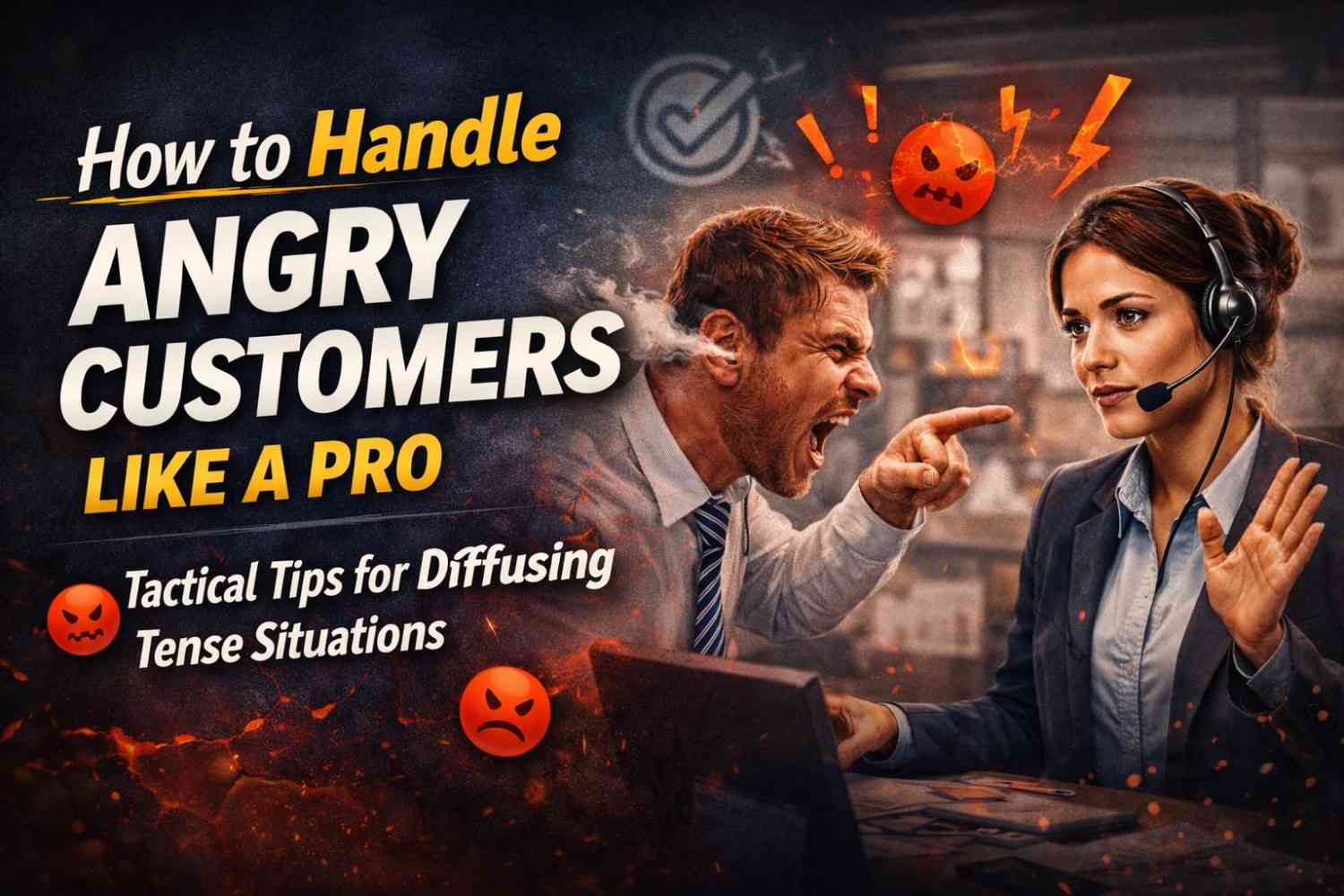
How to Handle Angry Customers Like a Pro: Turn Conflict into Customer Loyalty
Introduction: The Hidden Opportunity Behind Every Angry Customer
Every business, no matter how refined its processes or how excellent its product, will eventually face angry customers. It’s not a matter of if—it’s a matter of when.
But here’s the truth most businesses overlook:
An angry customer is not a problem—it’s an opportunity.
An opportunity to:
- Build trust
- Strengthen relationships
- Showcase your brand’s values
- Turn frustration into long-term loyalty
In fact, research consistently shows that customers who experience a problem that is resolved effectively are often more loyal than those who never faced an issue at all.
So instead of fearing angry customers, the smartest businesses learn how to handle them like pros.
This guide will walk you through:
- The psychology behind customer anger
- Proven strategies to de-escalate situations
- Communication frameworks that actually work
- Real-world techniques to turn conflict into loyalty
Why Customers Get Angry (Understanding the Psychology)
Before you can handle anger, you need to understand it.
Customer anger is rarely just about the surface issue. It’s usually driven by deeper emotional triggers:
1. Unmet Expectations
Customers come with expectations—about product quality, service speed, or communication. When reality doesn’t match expectations, frustration begins.
2. Feeling Ignored or Disrespected
Nothing escalates anger faster than feeling unheard. If a customer believes your business doesn’t care, emotions intensify quickly.
3. Loss of Time or Money
Time and money are deeply personal. When customers feel either has been wasted, their reaction becomes emotional—not just logical.
4. Lack of Control
People get angry when they feel powerless. Poor communication or unclear solutions can make customers feel trapped.
The Golden Rule: Don’t Take It Personally
One of the biggest mistakes customer support teams make is taking anger personally.
Remember:
- The customer is angry at the situation, not you
- Emotional reactions are often temporary
- Your role is to solve, not react
When you detach emotionally, you gain control over the conversation.
The PRO Framework: A Proven Method to Handle Angry Customers
Let’s break down a simple yet powerful framework:
P – Pause and Listen Actively
When a customer is angry, your first instinct might be to respond immediately. Don’t.
Instead:
- Let them speak without interruption
- Listen for both facts and emotions
-
Use verbal cues like:
- “I understand”
- “I’m listening”
- “Please go on”
Why it works:
Most customers calm down when they feel heard.
R – Recognize and Empathize
Acknowledging emotions is critical.
Avoid saying:
- “Calm down”
- “It’s not a big deal”
- “That’s our policy”
Instead say:
- “I completely understand why this would be frustrating.”
- “I’m really sorry you had this experience.”
- “That shouldn’t have happened.”
Why it works:
Empathy reduces emotional intensity and builds trust instantly.
O – Offer a Solution
Once the customer feels heard, they become more open to solutions.
Steps:
- Clearly explain what went wrong (if known)
- Provide a practical solution
- Offer options when possible
Examples:
- Refund or replacement
- Priority service
- Discount or compensation
Pro Tip:
Always focus on what you can do, not what you can’t.
Communication Techniques That De-escalate Instantly
1. Use Positive Language
Instead of:
- “We can’t do that”
Say:
- “Here’s what we can do for you…”
2. Control Your Tone
Your tone matters more than your words.
- Stay calm
- Speak slowly
- Avoid sounding defensive
3. Mirror the Customer’s Concern
Repeat their issue in your own words:
“So you’re saying the order arrived late and the product was damaged, correct?”
This shows understanding and builds alignment.
4. Apologize Without Overdoing It
A genuine apology goes a long way.
- “I’m sorry for the inconvenience caused.”
- “We truly regret this experience.”
Avoid robotic or repeated apologies—it can feel insincere.
What NOT to Do (Critical Mistakes to Avoid)
❌ Interrupting the Customer
This instantly escalates anger.
❌ Blaming the Customer
Even if they’re wrong, never accuse.
❌ Using Scripted Responses
Customers can tell when you’re reading from a script.
❌ Being Defensive
Defensiveness shifts focus away from the solution.
❌ Ignoring the Issue
Delays or silence only make things worse.
Turning Conflict into Loyalty: The Real Game-Changer
Handling anger is one thing. Turning it into loyalty is where the magic happens.
1. Go Beyond the Basic Solution
Don’t just fix the issue—add value.
Example:
- Issue resolved + discount coupon
- Replacement + faster delivery
2. Follow Up
A simple follow-up message can make a huge impact:
- “Just checking if everything is working fine now.”
- “We wanted to ensure your issue has been fully resolved.”
This shows genuine care.
3. Personalize the Experience
Use the customer’s name. Reference their issue.
People remember how you made them feel—not just what you did.
4. Empower Your Support Team
Give your team the authority to:
- Offer solutions quickly
- Make judgment calls
- Avoid unnecessary escalations
Speed matters.
Real-Life Example: From Angry to Loyal
Imagine this scenario:
A customer receives a damaged product and immediately contacts support, frustrated and upset.
Bad Response:
- Delayed reply
- Generic apology
- Complicated refund process
Result: Customer leaves a negative review and never returns.
Professional Response:
- Immediate acknowledgment
- Empathetic tone
- Replacement shipped within hours
- Discount offered for next purchase
- Follow-up after delivery
Result: Customer becomes loyal and even recommends your brand.
The Role of Technology in Handling Angry Customers
Modern tools can significantly improve customer handling:
1. AI-Powered Chat Support
Quick responses reduce frustration.
2. CRM Systems
Track customer history for personalized support.
3. Omnichannel Communication
Allow customers to reach you via:
- Chat
- Social media
- Phone
Consistency across channels is key.
Training Your Team to Handle Angry Customers
Your strategy is only as strong as your team.
Key Training Areas:
- Emotional intelligence
- Active listening
- Conflict resolution
- Communication skills
Role-Playing Exercises:
Simulate real scenarios to build confidence.
Metrics That Matter
Track performance to improve continuously:
- Customer Satisfaction Score (CSAT)
- Net Promoter Score (NPS)
- First Response Time
- Resolution Time
These metrics reveal how well your team handles conflict.
Advanced Strategies Used by Top Brands
1. Surprise and Delight
Unexpected gestures leave lasting impressions.
2. Transparency
Be honest about mistakes. Customers respect honesty.
3. Ownership Culture
Encourage employees to take responsibility—not pass blame.
The Emotional Shift: From Conflict to Connection
At its core, handling angry customers isn’t about policies or scripts.
It’s about:
- Understanding emotions
- Building trust
- Creating human connections
When done right, even the most difficult conversations can become powerful moments of connection.
Conclusion: Master the Moment, Win the Customer
Angry customers are not obstacles—they’re opportunities in disguise.
When you handle them professionally:
- You build trust
- You strengthen your brand
- You create loyal advocates
In today’s competitive world, customer experience is everything.
And the brands that win are not the ones that avoid problems…
They’re the ones that handle them brilliantly.
Next time a customer gets angry, don’t panic.
Pause. Listen. Empathize. Solve.
Because that moment of conflict?
It might just be your biggest chance to create lifelong loyalty.